An 82-Day Breach, a 38 GB Leak and a Gang That Was Supposed to Be Gone: October 2026 in Ransomware

MGT Lojistik, a Turkish freight company, was breached on 22 July. Nobody noticed until 12 October. That’s 82 days in which NightSpire had access to the network of a company that moves goods along the Türkiye–Europe corridor, and it’s the longest gap between attack and discovery in ThreatMon’s October report.

The rest of the month didn’t slow down either. We counted 977 ransomware victims, up from 762 in September. A new group stole 38 GB from a US credit association. TheGentlemen, whose operation was believed to be winding down, kept posting new victims until the last day of the month.

Key Findings

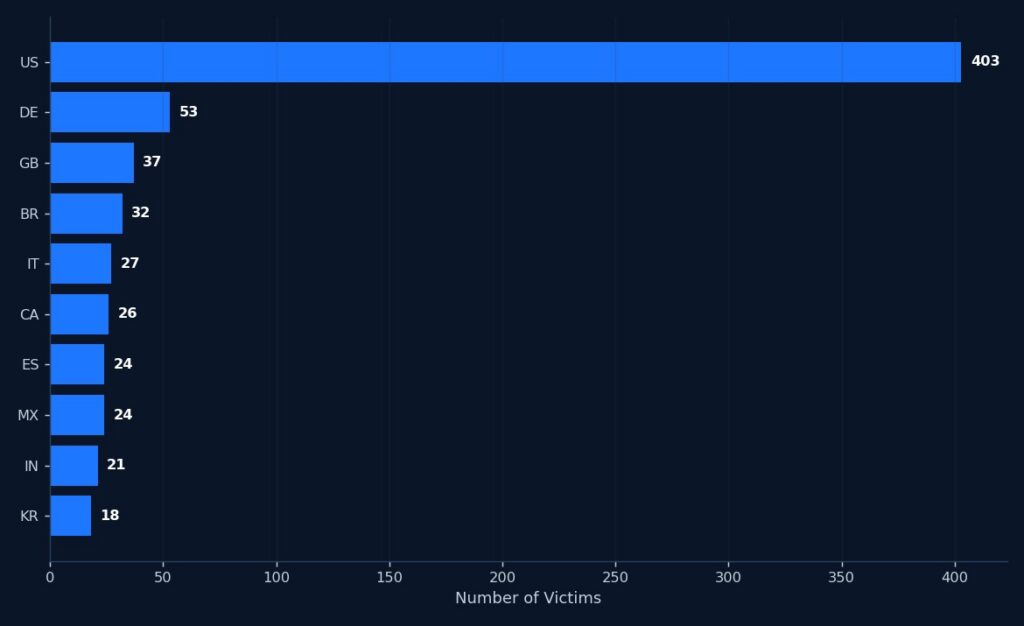
  • ThreatMon tracked 977 ransomware victims in October 2026. The US had 403 of them (41.2%), its largest share in recent months.
  • Germany (53), the UK (37), Brazil (32) and Italy (27) completed the top five, which together accounted for 552 victims, close to 57% of the total.
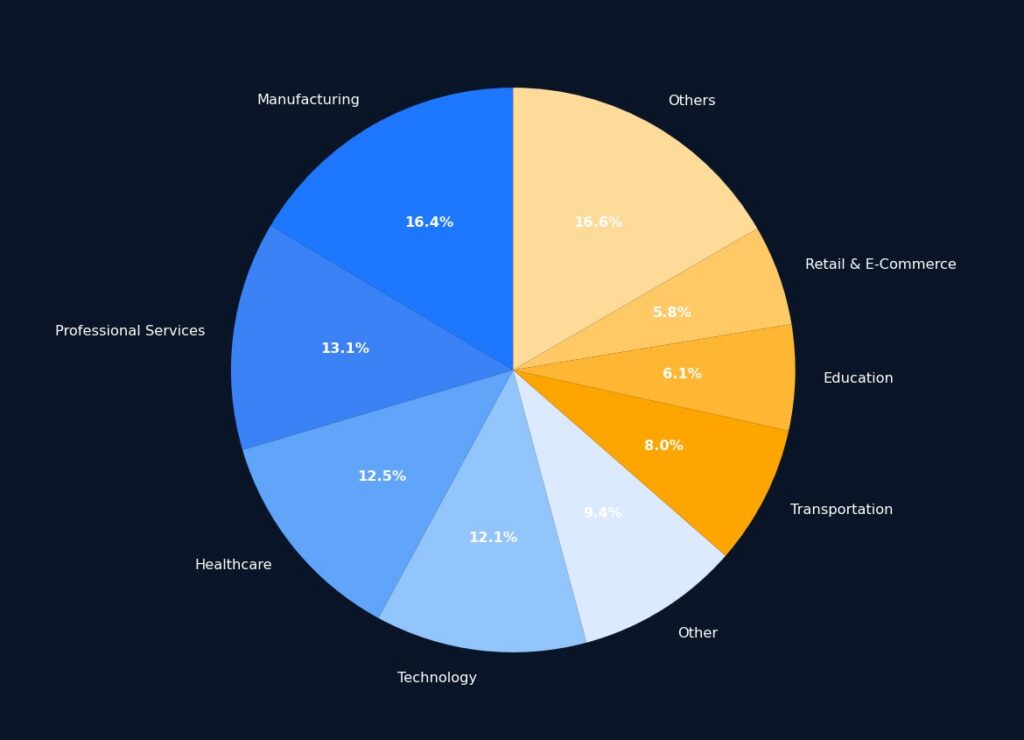
  • Manufacturing (163), Professional Services (130), Healthcare (124) and Technology (120) were the most targeted sectors.
  • We examined 10 notable attacks by 5 groups: Qilin, Booba Project, SafePay, NightSpire and TheGentlemen. The victims were in Türkiye, the US, Germany, Italy, Ecuador and Taiwan.
  • NightSpire stayed inside MGT Lojistik for 82 days before the attack was discovered.
  • Booba Project, active only since June 2026, claimed 38 GB from the National Association of Credit Management.
  • At the time of writing, none of the stolen data from these 10 cases had shown up in ThreatMon’s dark web matches.

Where the Attacks Landed

Geographic distribution of ransomware victims, October 2026

The US share grew again. In September it was 35%. In October it passed 41%. Germany stayed second with 53 victims, though that’s still less than a seventh of the US figure. Canada (26), Spain and Mexico (24 each), India (21) and South Korea (18) round out the top ten. Mexico’s appearance stands out: the C2 operation we analyzed recently was also aimed at Mexican organizations.

Which Sectors Took the Hardest Hits

Sector distribution of ransomware victims, October 2026

Manufacturing led for another month, but its lead is shrinking. Healthcare rose to 124 victims (12.5%), close behind Professional Services. Two of the ten cases we looked at closely were healthcare organizations: a rural hospital in Nebraska and a medical alert provider. For teams in these sectors, the healthcare and manufacturing threat pictures are getting harder to tell apart.

Ten Attacks Worth a Closer Look

MGT Lojistik (Türkiye) – NightSpire

MGT Lojistik handles road and air freight, project cargo and end-to-end supply chain management, with a fleet of more than 200 trucks. NightSpire’s leak post gives the company description and a “What do we have?” heading. As of now, the section under that heading is empty.

NightSpire’s leak post for MGT Lojistik

With nearly three months of access, an attacker could easily map shipment systems, customer records and backups. NightSpire is also known for unusually short ransom deadlines, sometimes only two days. Once a victim like this finally notices the breach, there’s very little time left to respond. This isn’t the first Turkish case in our reports. Our ransomware threat landscape in Türkiye analysis shows logistics and manufacturing coming up again and again.

National Association of Credit Management (US) – Booba Project

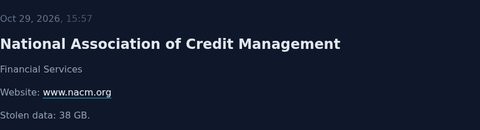
NACM is the main professional body for credit managers in the US. Booba Project posted it on 29 October and claimed 38 GB of data. That’s the only confirmed data volume of any significance among this month’s ten cases.

Booba Project’s leak post for NACM

An organization like NACM holds member records, credit reporting data and business information from thousands of companies. For financial services firms that work with it, this is a third-party risk as much as NACM’s own problem. On the same day, Booba Project also listed LifeFone, a medical alert provider for elderly users, with “less than 1 GB” of stolen data.

Spontini and Zehren and Associates – TheGentlemen

TheGentlemen hit two very different targets on 26 October. Spontini is a Milan pizza chain founded in 1953, with 42 stores in 11 countries and over 800 employees. Zehren and Associates is a 37-person architecture firm in Colorado that has designed projects for Vail Resorts.

TheGentlemen’s leak post for Spontini

Zehren’s leak page shows a countdown, “Activates in 26:46:57,” so the clock on publication was already running.

Zehren and Associates leak page with countdown timer

That’s interesting, because our own group profile notes that TheGentlemen’s activity was expected to stop in October after a C2 server was compromised and linked the group to more than 1,570 victims. The leak site didn’t stop, though. The group’s last recorded activity is 31 October. Whether it’s affiliates finishing old jobs or the operation simply continuing, it’s too early to write TheGentlemen off.

The rest of the list

  • Community Medical Center, Falls City (US) – Qilin. A small Nebraska hospital, attacked on 27 October and discovered four days later. EHR and diagnostic systems are the most likely to have been disrupted.
  • TRAUCO AG (Germany) – Qilin. A building materials manufacturer, attacked and discovered on 30 October. The leak post comes with a publication timer and a gallery of document screenshots as proof.
  • quevedo-ponce.com (Ecuador) – SafePay. SafePay’s post describes it as a law firm founded in 1941 that serves multinational clients.
  • MARS Semiconductor (Taiwan) – SafePay. A wireless audio and video SoC designer based in Hsinchu Science Park, publicly traded in Taipei. For a company like this, the real asset at risk is chip design data.
  • Fondy Food Pantry (US) – NightSpire. A nonprofit food bank. It’s a reminder that NightSpire doesn’t filter its targets by ability to pay.

The Groups Behind October

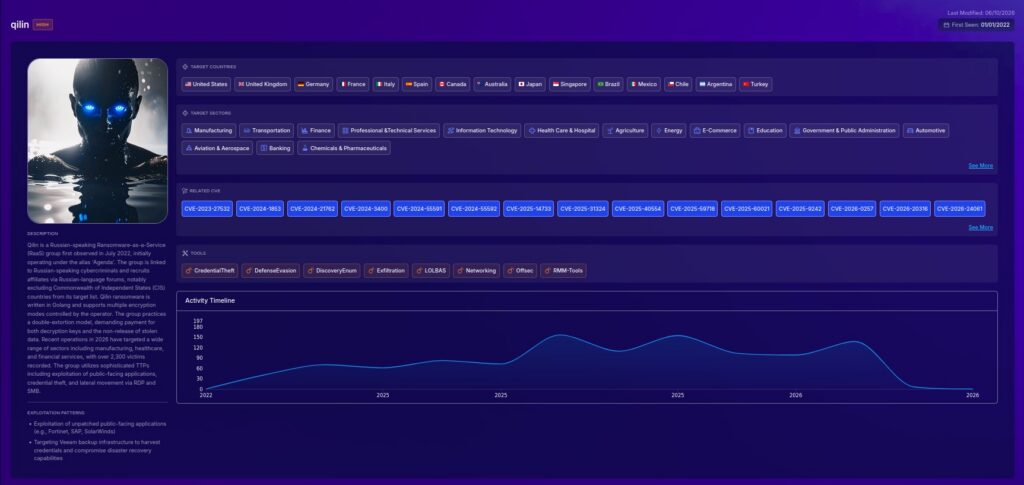
Qilin (2,558 victims) is still the most active group we track, adding more than 200 victims since September. Its toolkit includes Mimikatz, EDRSandBlast and a vulnerable Toshiba driver used to disable endpoint protection (BYOVD).

ThreatMon threat actor profile for Qilin

SafePay (604) keeps running everything in-house rather than using affiliates. It finds shares with Invoke-ShareFinder and compresses data with 7-Zip and WinRAR before exfiltration. NightSpire (364) uses Everything.exe to find files quickly and moves data out through MEGA and WinSCP. Booba Project is the newcomer: 58 victims since 24 June. That number is low, but going by NACM, it isn’t hitting small targets.

You can follow the full profiles of all five groups, including their tools, sector focus and leak site activity, through ThreatMon Threat Actor Monitoring.

What October Tells Us

The most important line in the report is easy to miss: none of the data from these ten cases has appeared on the dark web yet. That isn’t good news. More often it means the publication date simply hasn’t come yet. In September, Play gave Titus four days. NightSpire is known for two-day deadlines. Zehren’s countdown was down to hours. ThreatMon Dark Web Intelligence keeps watching those leak sites, so an affected company hears about a publication when it happens, not from the press.

The MGT case is the other lesson. Eighty-two days is enough for an attacker to do almost anything inside a network. The gap usually comes down to visibility: unmonitored VPN accounts, credentials leaked in stealer logs, external services no one is watching. Ransomware Prevention is built to catch those early signals before encryption starts.

The basics still matter: multi-factor authentication, tested immutable backups, network segmentation, and an incident response plan that’s ready to run within 48 hours.

To see whether your organization or your suppliers are showing up on leak sites, talk to our team or start with free access. You can read last month’s picture in Four Days to Pay.

Table of Contents
advanced divider

More posts

This image is about monthly vulnerabilities for September 2024.
This image is about the ServiceNow data leak.
This image is about monthly vulnerabilities for July 2024.
advanced divider

Share this article

Found it interesting? Don’t hesitate to share it to wow your friends or colleagues

advanced divider

Subscribe to our blog newsletter to follow the latest posts