Make $500 in 30 Minutes: The Fake Changelly Exploit That Swaps Your Wallet Address
The pitch is simple. Changelly supposedly still runs an old backend node, version 3.27, with a bug in how it calculates exchange rates. Paste a line of JavaScript into your browser while you’re on the site, enter the developer password (“admin,” naturally), and every swap pays out about 50% more than it should.
None of it is real. ThreatMon’s threat intelligence team followed this “exploit” from dark web forum spam to a Telegram channel, then through a Google Docs loader and a Google Sheet hiding 76 KB of obfuscated code. At the end of that chain there’s no backend flaw. There’s a script that changes where your crypto goes and inflates the numbers on screen so you don’t notice. The full analysis is in our report, The Fake Zero-Day Trap.
Key Findings
New accounts on several dark web forums post fake database leaks (including Turkish organizations) and “how to make money” threads that send readers to Telegram. Most of these accounts get banned for spam shortly after posting.
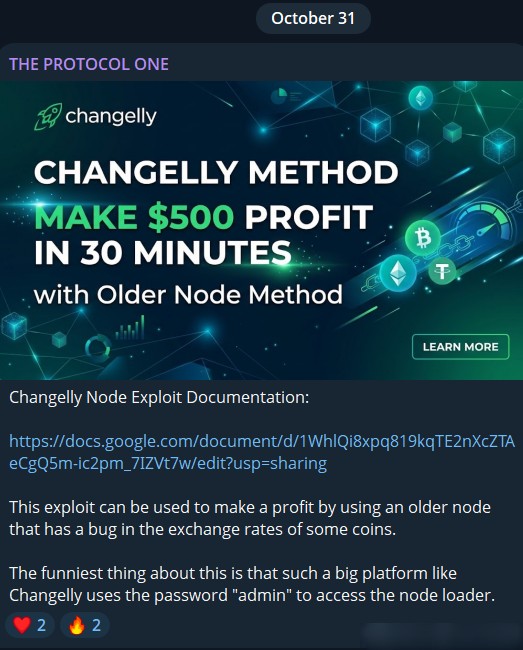
The Telegram channel THE PROTOCOL ONE (about 1,759 subscribers) advertised a “Changelly Method” on 31 October 2026, promising $500 profit in 30 minutes.
Victims are told to run JavaScript on the real Changelly site, either through a javascript: URL in the address bar or through the developer console. This is a classic self-XSS lure.
The loader hides a Google Sheets endpoint behind a fake docs.changelly.com URL and pulls the second-stage payload from two cells named node and path.
The payload hooks fetch(), replaces the destination address with hardcoded wallets (BTC, ETH, SOL, LTC, XMR) and multiplies the displayed amounts by 1.55.
Changelly was not breached. The attack runs entirely in the victim’s own browser. No confirmed theft or victim transactions were identified.
From Forum Spam to Telegram
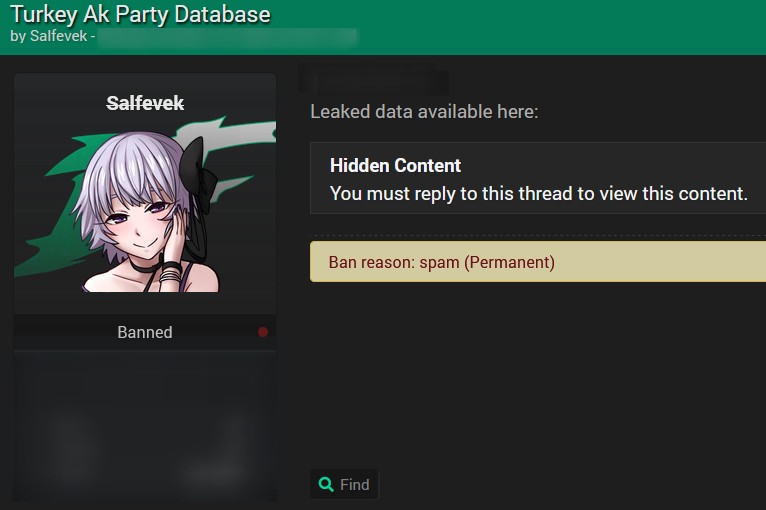
The campaign starts in places where people expect to find stolen data. Threads with titles like “TurkNet Database” or “Turkey Ak Party Database” hide the content behind a “reply to unlock” gate. Every reply pushes the thread back up the list. When the content finally unlocks, it isn’t a database. It’s a Telegram link.
Fake database leak thread with reply-to-unlock content, posted by a banned account
The channel those links point to presents itself as a research group working on “0-day research,” “infrastructure gaps” and “on-chain alpha.” On 13 October it promised an OnlyFans exploit. That post was later edited to say the bug had been patched and a Changelly exploit would come instead. The channel also claims an earlier version of it had 10,000 subscribers before being shut down. None of this can be verified, and all of it serves the same purpose: making the operators look like they know what they’re doing.
THE PROTOCOL ONE’s 31 October post advertising the “Changelly Method”
The Pitch Doesn't Hold Up
The Google Docs guide that came with the post walks through a sample swap: put in $4,200, get $6,125 back, keep $1,925 as profit. It says the trick works with BTC, LTC, ETH, XMR and SOL, as long as the transaction is above $200.
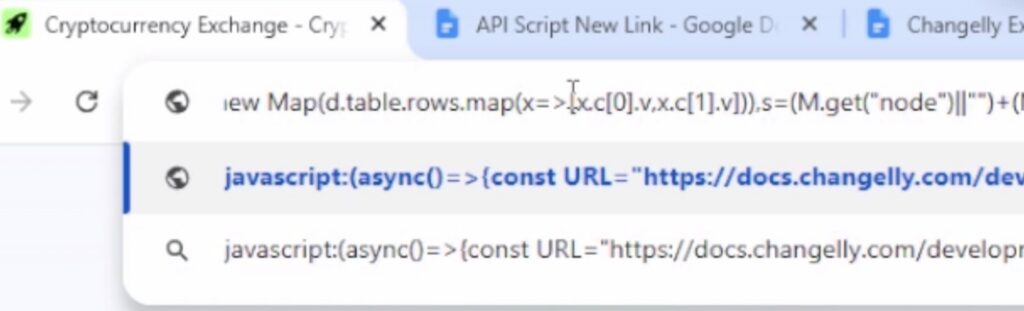
Then come the instructions. Open Changelly, type javascript: in the address bar and paste the code after it. If your browser blocks that, open DevTools, allow pasting and run the code there.
First-stage payload entered with the javascript: prefix
That’s the red flag. A javascript: URL doesn’t take you anywhere. It runs code inside the page you already have open, with access to that page’s DOM and requests. Getting someone to do this on an exchange where they’re logged in is a well-known self-XSS trick. The guide even tells users how to switch off the browser warning that exists to stop exactly this.
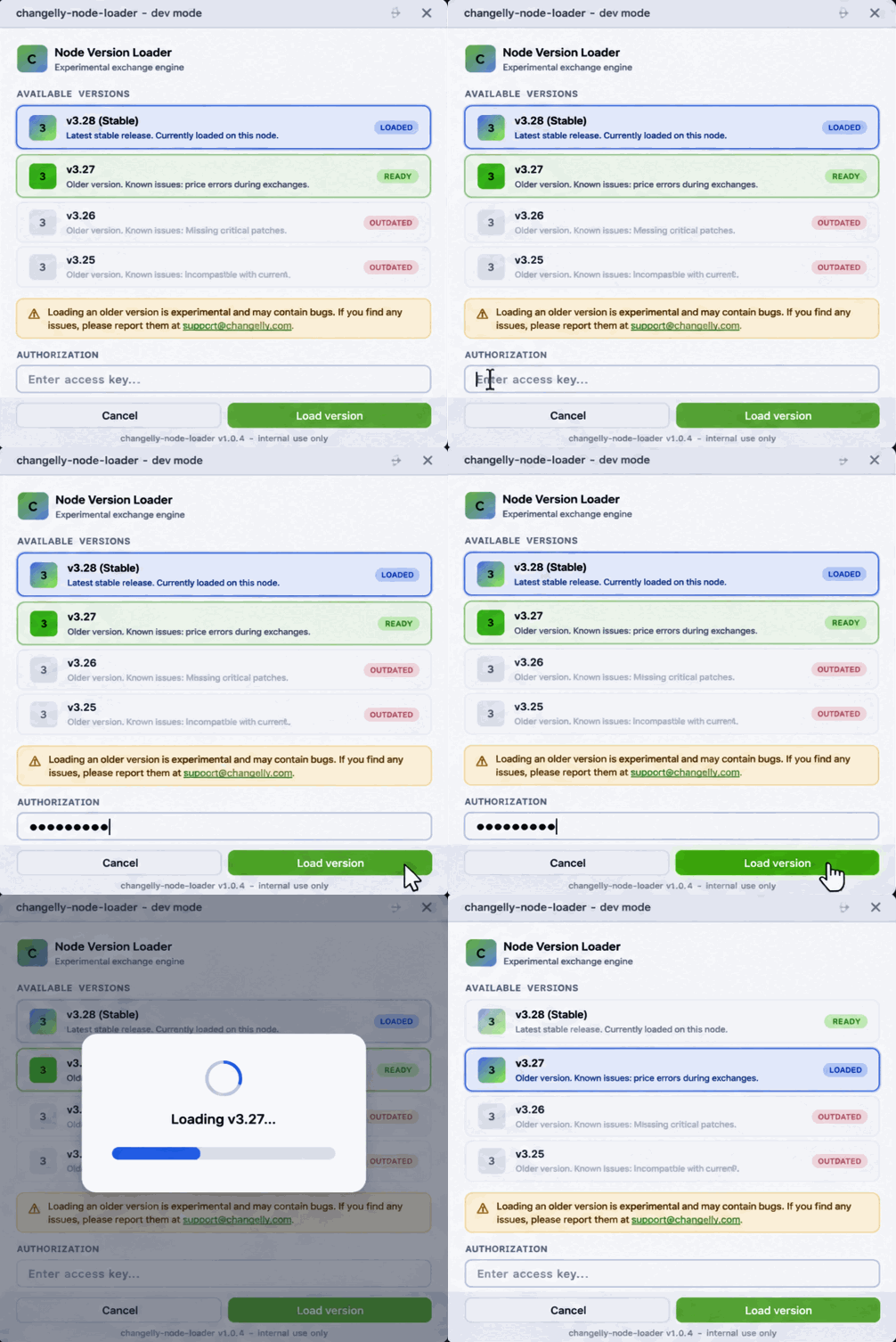
The demo video doesn’t help the operators’ case either. It shows a “node loader” panel appearing on top of Changelly and covers the first two steps. It never shows a finished swap, a transaction ID or anything on-chain.
The fake “changelly-node-loader” developer panel
What the Code Actually Does
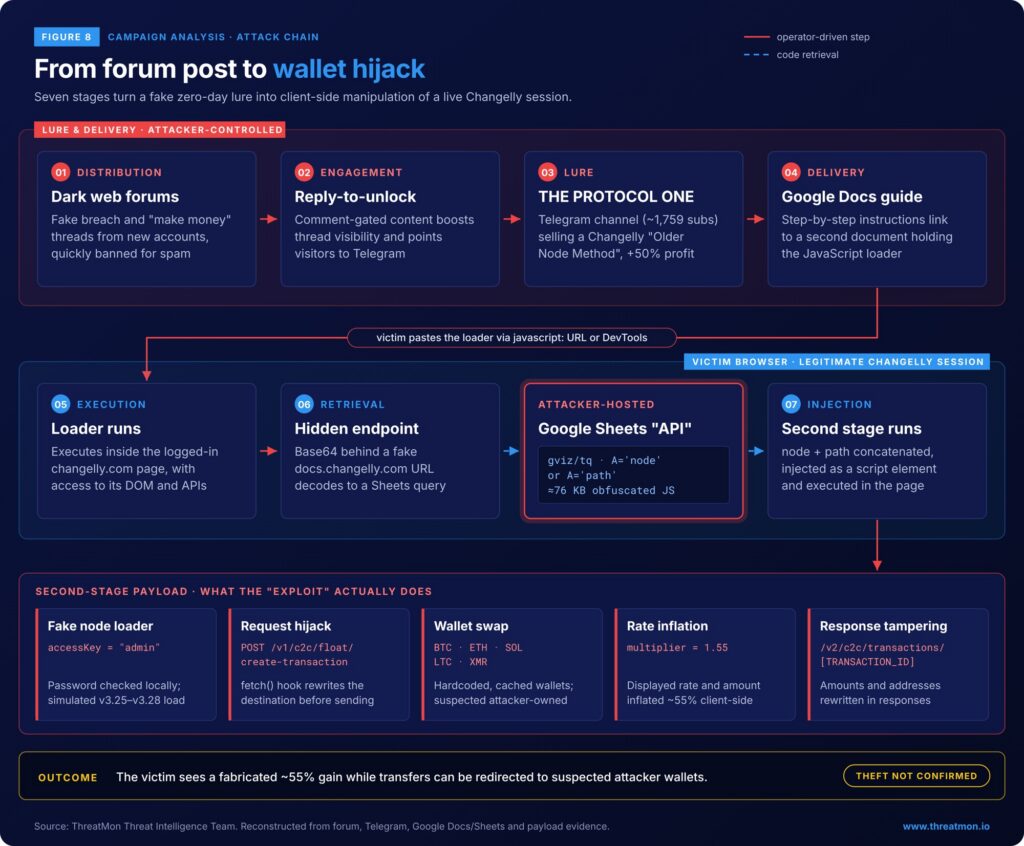
The full chain looks like this:
Attack chain from forum post to wallet hijack
Stage one looks like a link to Changelly’s own documentation: https://docs.changelly.com/development/authentication?=. The real destination is the Base64 string after ?=. The script decodes it with atob() and passes the result to fetch(). That decoded address is a Google Visualization API query (gviz/tq) against a sheet named API, asking for the rows labeled node and path.
Opened normally, the sheet shows nothing but “API ONLINE.” Queried through the API, those two rows return about 76 KB of obfuscated JavaScript. The loader joins the two values, puts them in a <script> tag, runs it and removes the tag.
Stage two is where the theft happens:
A fake developer panel. It lists node versions 3.25 to 3.28. The “admin” password is checked inside the script itself (const accessKey = "admin"), so typing it in proves nothing about Changelly’s backend.
Address swapping. The script hooks window.fetch. When a POST to /v1/c2c/float/create-transaction goes out, it reads the coin type, picks one of the hardcoded addresses for that coin and writes it into the request before sending it on.
Fake profits. A hardcoded multiplier = 1.55 is applied to the displayed rate and the amount you’ll supposedly receive. A $1,000 swap shows up as about $1,550. That’s where the “50% bonus” comes from, and it only exists on your screen.
Hidden tracks. Responses from /v2/c2c/transactions/[ID] are rewritten too, including amounts and address fields, so the transaction details shown to the user don’t match what the server actually returned.
The same $200 threshold. The script gets live prices from CoinGecko and only acts on transactions above $200. That’s the same minimum the guide advertised, which ties the payload directly to the pitch.
In short, the victim watches an inflated number while their swap goes to someone else’s wallet.
How to Avoid It, and What It Means for Exchanges
For users, the rule is simple. No real exploit asks you to paste code into your browser while you’re logged in to an exchange, wallet or bank. If anyone tells you to type javascript: or turn off a browser warning, stop there.
For exchanges and fintech teams, this campaign targets the client side, which server-side controls never see. A few things help: a strict Content Security Policy, checking destination addresses on the server against what the user actually confirmed, and showing the final address on a separate confirmation step. Watching for your brand in underground posts and Telegram lures also gives you warning before your users start running these scripts.
Conclusion
What stands out here is the targeting. The people most likely to fall for a “zero-day” pitch are the ones already browsing forums for leaked databases and easy money. They’re also the least likely to report being scammed. The operators turned the crime ecosystem’s own appetite against it, and they used a legitimate exchange’s name to do it.
ThreatMon found this campaign through the same channels it ran on: forum threads, Telegram channels and shared documents. Dark Web Intelligence and Threat Actor Monitoring track these sources continuously. For exchanges and financial services firms whose names show up in lures like this, Fraud Intelligence and Brand Protection flag the campaign while it’s still a Telegram post, not after the support tickets start coming in.