Access sales, physical process claims and OT exposure across North America and Europe
Administrator access to an office network in Romania is advertised for approximately USD 150. Access to an industrial controller in Arizona is offered for 30 XMR. The listings name PLC models, process variables, VPN endpoints and remote management services. Other posts claim access to fuel tanks, energy storage systems and pumping-station panels.
The advertised permissions extend beyond seeing a device online. Sellers claim they can read controller data, write to some variables or reach connected networks. If those permissions exist, they raise different risks: loss of operational information, abuse of remote access and changes to process data. Claims of physical intervention matter because the implications of an access offer may extend into the production or service process connected to the asset.
ThreatMon examined eight forum posts and one Telegram screenshot for this study. The nine examples show how access is priced, which technical details are used as sales material and how physical-control claims are presented. We also used existing internet service records to assess the visibility of the products and access surfaces mentioned. The findings are organized into three threat categories: access for sale, claims of physical process manipulation and SCADA interface exposure.

Conceptual OT illustration; not incident evidence.
The table summarizes the nine posts and their asking prices. Access descriptions are the account holders’ claims. A tag is a named variable or data item in a controller program; tag counts must not be confused with device counts.
Source and date | Claimed location | Device or system | Content of the post | Asking price |
|---|---|---|---|---|
Forum | Romania | RouterOS gateway | Full administrator privileges, LAN access, two WireGuard tunnels and Wi-Fi PSK; approximately 161 hosts claimed | Approximately USD 150; payment in XMR |
Forum | Calgary, Canada | Rockwell 1769-L33ER/A | Claimed unauthenticated read/write access to 384 tags over EtherNet/IP | 18 XMR |
Forum | Vandans, Austria | Rockwell 5069-L310ER/A | Read/write access to 274 tags; internal network and process structure details | 22 XMR |
Forum | Lubin, Poland | Rockwell 1747-L552 C/8 | Claimed live I/O and data-file reads; an additional responding L2TP endpoint | 15 XMR |
Forum | Gila Bend, Arizona, US | Rockwell 5069-L330ER/A | Read/write access to 170 tags, diagnostic data and a VNC service requiring credentials | 30 XMR |
Forum | Ulsan, South Korea | Rockwell 1769-L33ER/A | Read/write access to 23 tags, SNMP information and a claimed Modbus TCP gateway function | 12 XMR |
Forum | California, US | ATG / fuel tank monitoring system | Claimed retrieval of inventory and measurement data, followed by claims of physical intervention | Not stated |
Forum | Ukraine | Described as an energy storage and battery management system | Operational data, alarm records and claimed administrative or control permissions | Not stated |
Telegram · Date not visible | Presented as Israel | AquaControl SCADA panel | A 20-second video preview of a pumping-station monitoring interface | Not stated |
This group contains five PLC listings and one gateway listing. Controller offers emphasize data reads and writes; the network offer includes administrator accounts, tunnels and potential LAN reach. The Romanian post does not establish an industrial connection. We treat it as an example of network access being sold through infrastructure that can also support remote access, rather than as a demonstrated OT compromise.
Gateway Access to an Office Network in Romania
A listing published on September 26, 2026 claims full administrative access to a RouterOS gateway at a small business in Romania. The post describes three internal LANs, CCTV, Wi-Fi, approximately 161 hosts and two WireGuard tunnels. Administrator credentials and the Wi-Fi PSK are included in the proposed handover. The seller asks for approximately USD 150, payable in Monero.
The gateway’s privileges are marketed alongside the possibility of reaching the connected network. Offering tunnel and wireless configuration information with credentials creates an expectation that the buyer can maintain access after delivery.
The claim of 161 hosts does not establish that 161 devices were compromised. The post also mentions approximately 14 DHCP leases, without explaining how the inventory figures were derived. Listing CCTV as part of the environment does not prove access to camera feeds.
If valid, the advertised privileges could permit gateway configuration changes, use of the tunnels or discovery of connected services. Remote access to an industrial segment becomes a risk only where a network path and sufficient permissions actually exist. The post does not show that relationship; the relevant organizational question is the gateway’s real reach.
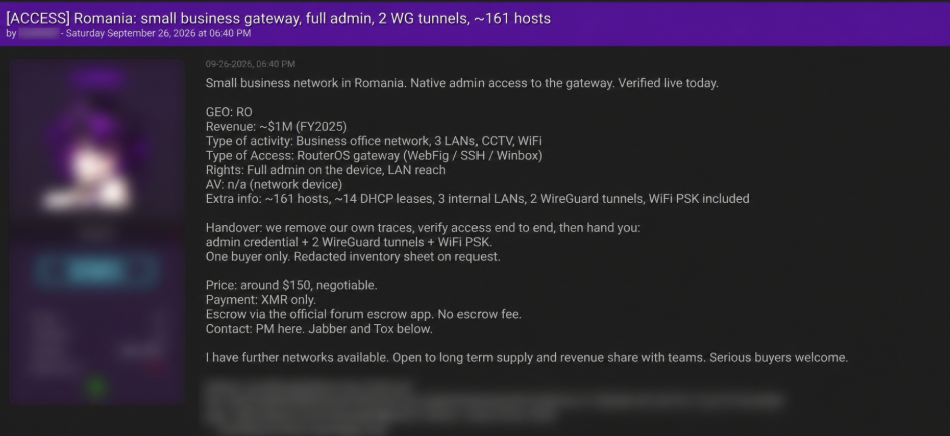
Figure 1. The Romanian listing describes a RouterOS gateway, the claimed internal network scope and the terms of delivery.
CompactLogix Controller Access in Canada
The Canadian listing published on September 15, 2026 concerns a Rockwell 1769-L33ER/A controller allegedly located in Calgary. The seller claims read/write access to 384 tags over EtherNet/IP and states that CIP access requires no authentication. The asking price is 18 XMR. IP and port information are to be provided after escrow is funded, with detailed validation material released after payment.
The 384-tag count describes the technical scope being offered. It does not represent 384 pieces of equipment or independent control points. Assessing impact requires the tags’ functions, data types and relationship to the physical process.
The listing also includes Starlink and service-provider details. These describe how the seller characterizes the target. They do not independently establish facility ownership or the controller’s physical location.
The claimed read access could reveal controller state and process variables. If write access exists, its effect depends on how the modified data is used by the control program. The priority is therefore not visibility alone, but which variables can be reached, by whom, and how changes are monitored.
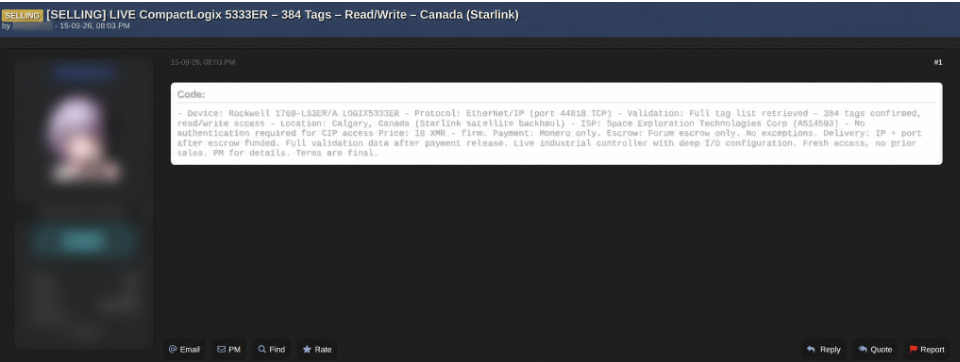
Figure 2. The Canadian CompactLogix listing claims read/write access to 384 tags.
PLC Access Marketed Through Process Detail in Austria
The Austrian listing published on September 16, 2026 names a Rockwell 5069-L310ER/A controller and 274 tags. It associates the tag structure with a weighing or batching process, describing measurement inputs, digital I/O and alarm handling. It also claims a /24 internal network and potential for lateral movement. The asking price is 22 XMR.
The seller uses apparent knowledge of the process alongside the controller access claim. If verified, this context could help an analyst identify operationally sensitive data. The narrative in the screenshot, however, is not an independent review of the program or process map.
The /24 network statement requires particular care. Obtaining an internal IP address or subnet mask does not establish reachability to the other devices in that network. Controller access and broader OT network access require different supporting evidence.
If the weighing or batching context is accurate, unauthorized changes to process-related variables could affect measurement, product quality or alarm handling. Those are potential outcomes, not observed effects at this target. The investigation should establish the process role of the advertised write access and whether the /24 network statement is supported by actual reachability.
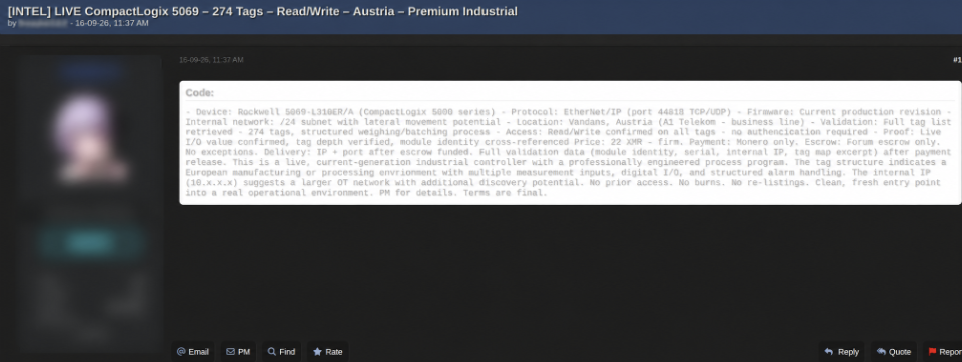
Figure 3. The Austrian post uses tag structure, process context and internal network information to market the alleged access.
SLC 500 and an L2TP Endpoint in Poland
The Polish listing published on September 16, 2026 concerns a Rockwell 1747-L552 C/8 SLC 500 controller allegedly located in Lubin. The seller claims that live I/O values and multiple data files can be read over EtherNet/IP. The post also states that an L2TP endpoint on UDP port 1701 is open and responding. The asking price is 15 XMR.
Although the title markets two access surfaces together, their permissions are not described at the same level. The PLC claim concerns reading data. The VPN claim establishes only that an endpoint allegedly responds; no working session, valid credentials or access through the tunnel is shown.
The available material therefore does not justify classifying this as verified VPN access. A responding VPN service is an exposure to assess, rather than evidence of permission to establish a session.
Reading I/O and data files could provide reconnaissance about equipment state and process activity. If a working L2TP session is independently established, its network reach would require separate assessment. PLC data reads and VPN access to an internal network are distinct risks; a responding endpoint does not establish the latter.
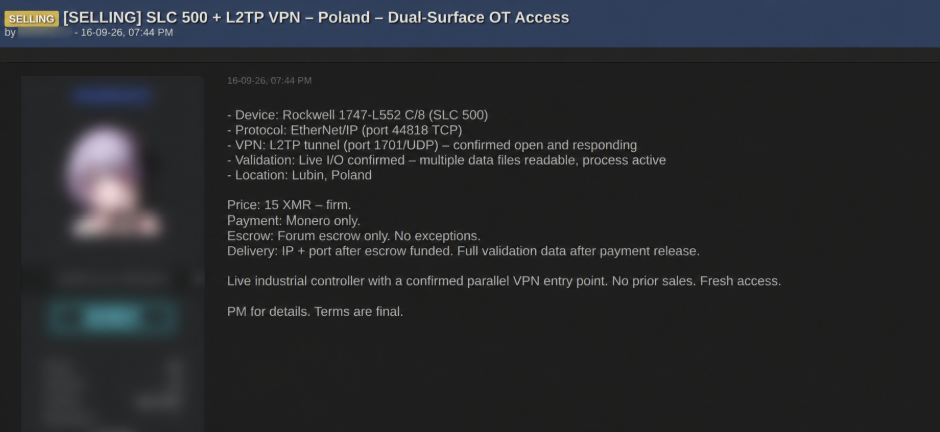
Figure 4. The Polish listing markets an SLC 500 access claim alongside an additional L2TP endpoint.
Controller Data and VNC in Arizona
The Arizona listing published on September 20, 2026 identifies a Rockwell 5069-L330ER/A controller, 170 tags, 16-channel digital input/output and per-channel diagnostics. The seller claims read/write access to all tags and asks for 30 XMR.
The post also mentions a VNC service on port 5900. It explicitly states that credentials are required and that the buyer must discover them. The text therefore does not offer VNC as a working access path included in the delivery.
The VNC condition exposes a boundary in the offer. Claimed access to controller data does not establish that other management services on the same host or network are usable.
Diagnostics and I/O information could expose signal states and faults. The controller write claim should be assessed for process-integrity implications, while VNC remains a separate access path. If a VNC session can actually reach an HMI or engineering system, its implications would depend on user privileges; the post does not demonstrate that relationship.
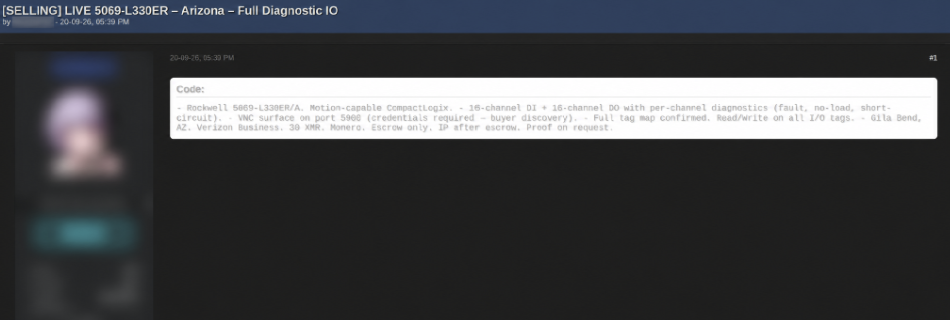
Figure 5. The Arizona post describes controller tags and diagnostics while leaving VNC credential discovery to the buyer.
PLC and SNMP Information in South Korea
The South Korean listing published on September 18, 2026 claims read/write access to 23 tags on a Rockwell 1769-L33ER/A controller in Ulsan. It describes EtherNet/IP access, an SNMP v1 service, system information and uptime values. A Modbus TCP gateway function is also claimed. The asking price is 12 XMR.
This example is excluded from the regional counts. It is retained to show how several capabilities are combined in one access listing. SNMP information may assist device identification, but it does not independently verify the CIP read/write claim or the claimed gateway function.
Different capabilities should not receive the same validation label. Reading device information, reading process data and changing process data are distinct levels of access.
SNMP system and uptime information could support device inventory and target profiling. If the claimed Modbus gateway function exists, the protocols and networks it connects also matter. That function alone would not establish that network boundaries have been crossed or that every connected device is reachable.
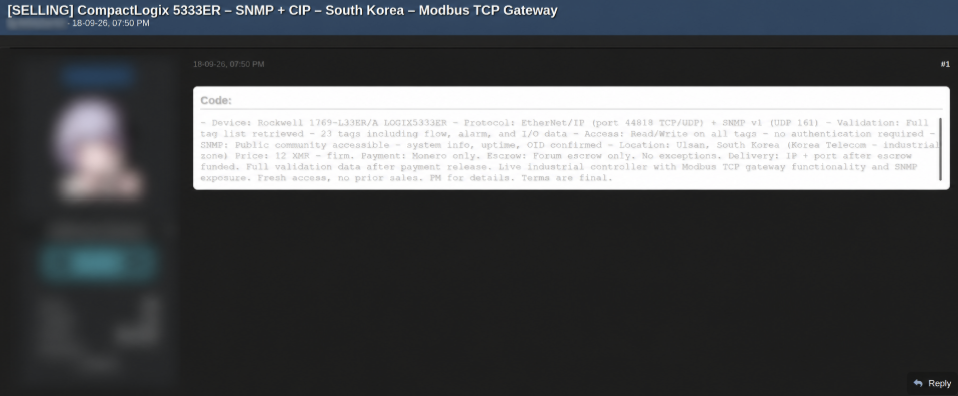
Figure 6. The South Korean listing combines EtherNet/IP, SNMP and a claimed Modbus TCP gateway function.
The tank and energy-system posts emphasize alleged operational effects rather than commercial delivery of access. Assessing these claims requires examining the connection between reading data, reaching an interface and commanding physical equipment. The following two posts show why that connection requires its own evidence.
The Fuel Tank Monitoring Claim in the United States
A post published on October 8, 2026 claims access to a fuel tank monitoring system at a gas station in California. It describes retrieving tank inventory, fuel volume, temperature, liquid level and water level. The account holder then claims the ability to stop pumps or interfere with tanks.
This is the central evidence gap: reading tank inventory does not establish permission to operate pumps. The described data read is insufficient to substantiate physical intervention. Some measurement units and decimal representations are also unclear, so we do not reproduce them as validated physical readings.
Exposure of operational data remains relevant. It may reveal inventory or operating conditions. The claimed physical impact, however, is a separate outcome requiring supporting evidence.
If the inventory and operating information belongs to a real facility, it could expose commercially and operationally sensitive data without physical intervention. Additional write or control-interface access could create risks of decisions based on inaccurate measurements or process interference. The supplied material does not demonstrate those additional permissions.
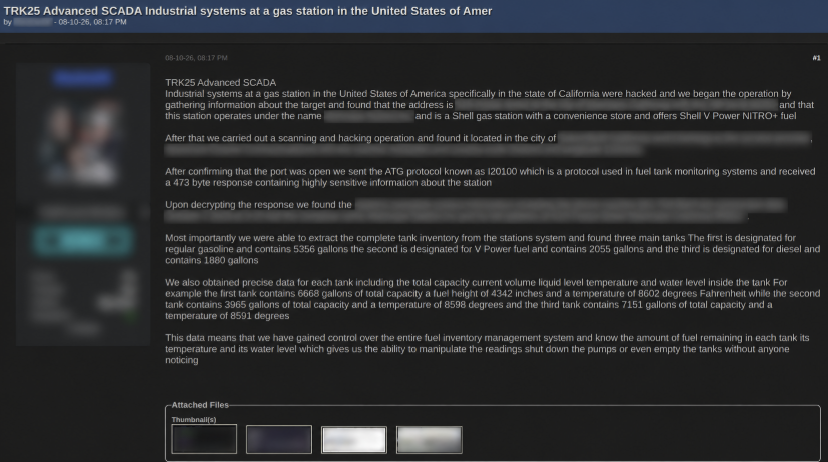
Figure 7. The US post claims retrieval of tank inventory data and the ability to intervene in physical operations.
The Ukrainian Energy System Claim and External Records
A post published on September 30, 2026 claims access to an energy storage and battery management system in Ukraine. It lists state of charge, battery voltage, stored energy and alarm information. Administrative interface access and physical control permissions are also claimed, and the system is associated with the Ukrainian electricity grid.
The post’s identification of port 110 as S7 provides a classification that can be checked. When we reviewed the published IP’s external service record on October 13, 2026, TCP port 110 was identified as POP3. No service classified as S7 appeared. Web, mail, DNS, FTP and SSH services were present. The host record was last updated on October 11, 2026.
The current record does not support the post’s S7/PLC description. Timing differences, collection coverage and changes in the IP’s use remain possible explanations, so the finding does not prove that every element of the claim is false. The evidence is insufficient to report this as a confirmed attack on the electricity grid.
If authentic, battery status, energy quantities and alarm information could disclose sensitive operating patterns. Independently verified access to privileged control functions would warrant assessment of energy-management and service-continuity risks. In this case, the first task is associating a technically inconsistent post with real assets and session records.
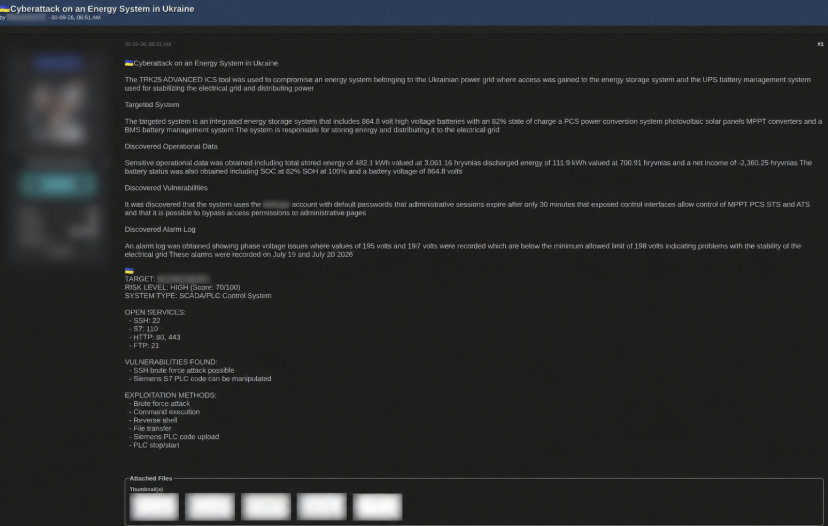
Figure 8. The Ukrainian energy-system claim contains a service classification that is not supported by the current external index record.
Sharing a SCADA panel is a different activity from selling access. The observable content here is the display of an interface and its operational context. Identifying the system and determining the session’s permissions are subsequent investigative questions.
A Pumping Station Panel on Telegram
The Telegram screenshot contains a 20-second video preview of an interface described as an AquaControl SCADA pumping-station monitoring dashboard. An Israeli flag and a regional map appear in the post. No price, delivery terms or access level are stated. The screenshot does not show a publication date.
The available material is a screenshot of a preview, rather than the video file. It supports the observation that a panel was displayed. It does not establish that the session was unauthorized, that the interface belonged to a live production system or that commands could be sent to pumps.
We treat this as an access-display post. It is not counted as a sale or included in the North America–Europe statistics.
If the view is unauthorized, the panel could disclose station names, alarms or operational layout. Separately established command permissions would raise the risk of HMI/SCADA functionality being misused. Session roles and recorded actions determine that distinction; the available preview establishes only that an interface was displayed.
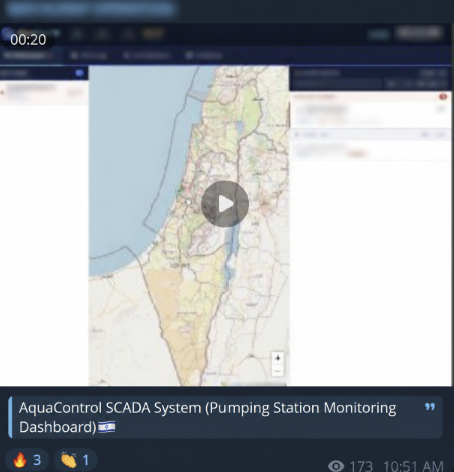
Figure 9. The Telegram video preview displays a panel presented as AquaControl SCADA.
The five Rockwell listings use a common sales vocabulary: device model, EtherNet/IP or CIP, tag count, advertised permissions and an XMR price appear in one offer. These details make the target and the proposed access more concrete for a buyer. Counts such as 384, 274, 170 and 23 make the offers look comparable, although they do not measure the same process function or level of impact.
Internal network information, live-I/O statements and diagnostic detail reinforce the impression that the access extends beyond finding an open port. Screenshots also support the presentation. For an analyst, the task is to associate each displayed detail with the permission it supports: recognizing a model, reading data, changing data and reaching another network require different evidence.
The same account defers IP and port disclosure until escrow is funded and detailed validation material until payment is released. This limits what the buyer can assess before payment. Statements about fresh access and no prior sales should also be read as sales representations intended to increase the offer’s value. The 12–30 XMR range does not establish transaction values or access quality.
These are observations about a shared approach in five listings from one account. They are not assumed to represent independently verified targets, independent actors or completed sales, and they cannot establish the size or preferences of the wider OT access market.
The examples make unauthorized reads, attempted controller-data changes, remote network access and misuse of HMI/SCADA interfaces distinct investigative subjects. Read access may disclose process information; the effect of write or command access depends on how the data is used by the control logic. MITRE ATT&CK for ICS treats changes to control and changes to the information shown to operators as separate forms of impact.[3][4]
We do not claim that those effects occurred in this study. Each case-specific risk assessment assumes that the advertised permission exists and reaches the relevant physical process. Asset inventory, network boundaries, account privileges and process records are needed to establish that relationship. The supplied material provides no finding that safety systems were disabled or physical damage occurred.
The models and services in the posts defined the starting point for the external exposure review. Records for Rockwell controllers, Modbus candidates and ATG responses provide context for whether these access surfaces can be encountered online. RouterOS and Winbox results supply infrastructure context for the gateway listing. This section is neither an OT asset inventory nor a regional threat ranking.
The research used 26 aggregate count queries. The first result pages of the Rockwell, ATG and RouterOS searches provided 300 banners for limited review. These pages are not random samples and are not assumed to represent country or product distributions. A separate current host lookup was performed for the IP in the Ukrainian post.
Records labeled as known honeypots were excluded from the main counts. This does not establish that unlabelled honeypots were also removed. The values are query matches, rather than counts of unique physical devices, businesses or verified access.
Query group | United States and Canada | Selected European countries | Total |
|---|---|---|---|
ICS-labeled records on port 44818 | 1,423 | 363 | 1,786 |
Rockwell/Allen-Bradley product label on port 44818 | 1,298 | 299 | 1,597 |
ICS-labeled records on port 502, Modbus candidates | 4,760 | 13,823 | 18,583 |
Siemens banner matches on port 102 | 16 | 373 | 389 |
ATG inventory banner matches | 1,203 | 48 | 1,251 |
ATG inventory banner with an ICS label | 1,037 | 45 | 1,082 |
MikroTik Winbox product label | 44,149 | 209,190 | 253,339 |
RouterOS HTTP title matches | 20,075 | 69,933 | 90,008 |
The rows may overlap and must not be added. The Rockwell row overlaps with the port 44818/ICS group; the ATG rows overlap with each other. Winbox and RouterOS results may also represent different services on the same device.
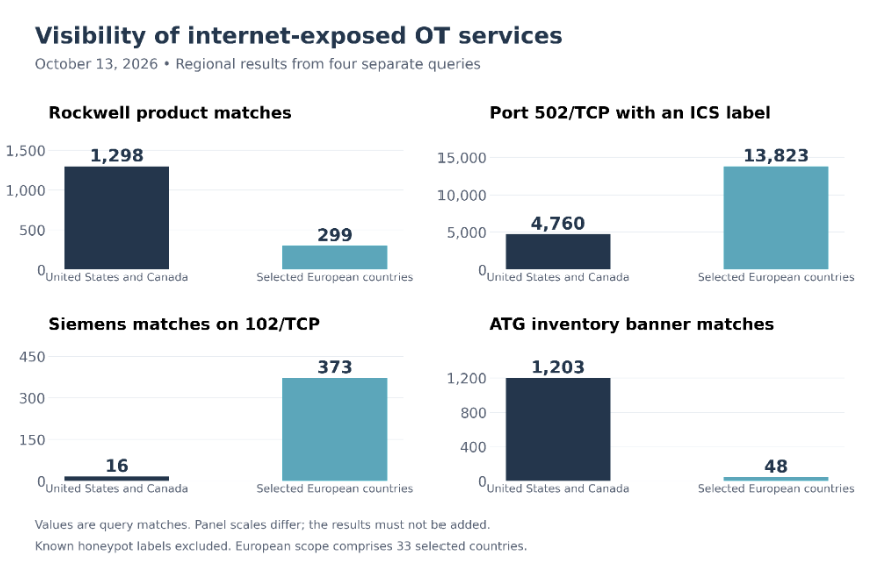
Chart 1. Visibility of the products and services mentioned in the posts. North America covers the US and Canada; Europe covers 33 selected countries. Panel scales differ. These results do not rank regional risk.
The initial port 44818 query returned 220,032 matches. Requiring an ICS label and excluding known honeypots reduced the defined group to 1,786 matches. The initial results also included labels for nginx, cameras and SSH.
The port results cannot therefore be described as 220,000 PLCs. A port is a useful starting filter, but it needs to be assessed with protocol recognition, product information and banner content. Likewise, the 18,583 results found through port 502 and an ICS label are not presented as individually verified Modbus devices.
After excluding known honeypot labels, the query identified 1,597 records with the Rockwell Automation/Allen-Bradley product label on port 44818. There were 975 matches in the United States and 323 in Canada. The selected European countries accounted for 299 matches, led by Spain with 73, Italy with 54 and Poland with 39.
This distribution reflects the study’s product and port definition. It does not measure the installed device base, national security performance or breach rates. Recognizing a product from its banner also does not establish unauthenticated access.
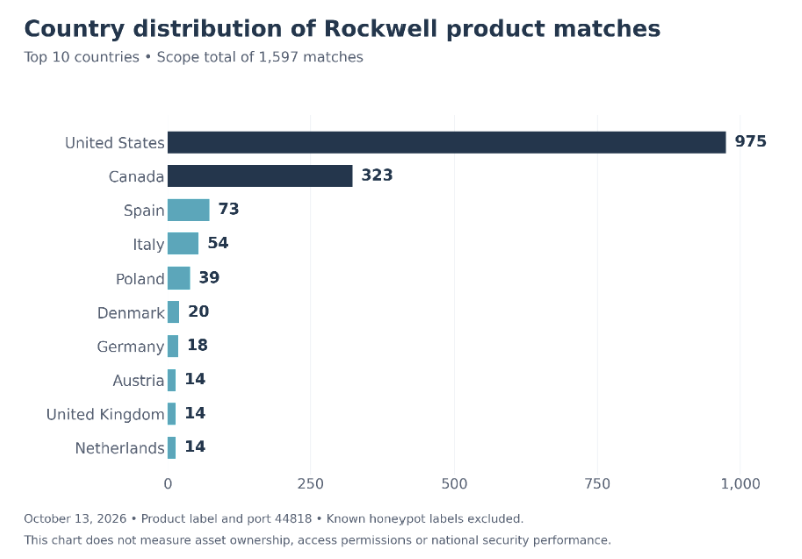
Chart 2. The top ten countries in the Rockwell/Allen-Bradley product-label and port 44818 group. Known honeypots are excluded. Counts do not establish working access.
The initial search for IN-TANK INVENTORY on port 10001 returned 1,967 matches. Of these, 716 carried the Gaspot product label. GasPot is a honeypot project designed to emulate tank monitoring systems.[2]
Excluding known honeypot labels left 1,251 matches: 1,203 in the United States and Canada and 48 in the selected European countries. The narrower query also requiring an ICS label returned 1,082 matches.
Gaspot-labeled records accounted for 36.4% of the initial results, showing how much honeypot classification can affect ATG counts. A realistic inventory response is not proof of a real gas station. We therefore do not assume that every record remaining after filtering represents a physical tank system in production.
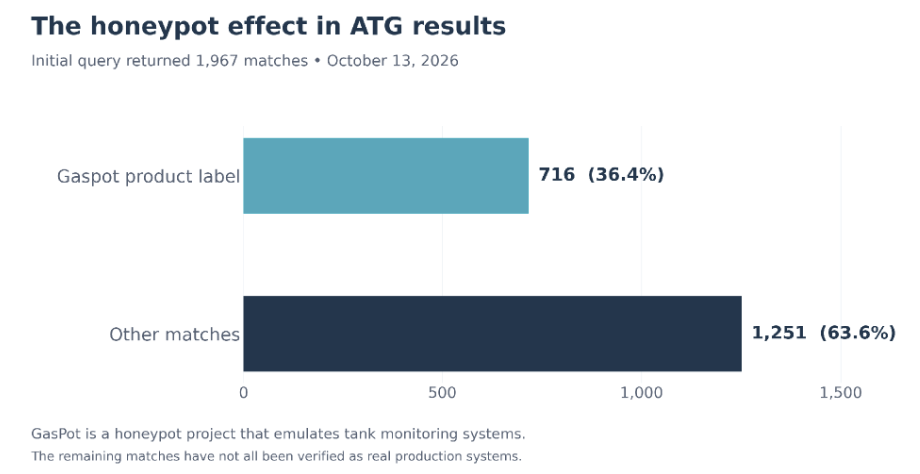
Chart 3. Gaspot-labeled records account for 36.4% of the initial ATG results. The remaining 1,251 matches have not all been verified as real production systems.
The MikroTik Winbox product-label query, excluding known honeypots, returned 253,339 matches. The RouterOS HTTP-title query returned 90,008. In Romania, the respective counts were 7,499 and 2,475.
These values provide context for internet visibility of the management services associated with the Romanian listing. They do not establish stolen administrator credentials, usable WireGuard tunnels or identification of the network being sold. The Winbox and web-management counts cover different services and cannot be combined into a total RouterOS device count.
The proportion of RouterOS and Winbox results connected to OT environments was not determined. Neither total should therefore be interpreted as a PLC or SCADA count. The Romanian post also lacks a demonstrated link between the office network and an industrial process; the useful question is which networks similar gateways can reach within the organization’s own architecture.
For an organization, the practical use is to compare these products and services with its own inventory. A Rockwell or Modbus-like service prompts review of access restrictions; an ATG response requires association with a real production asset; a RouterOS record raises the question of whether the gateway can reach an OT segment. These observations can guide defensive investigation without establishing that the indexed assets are the targets in the forum posts.
Four model strings from the listings were searched separately. Known honeypot labels were excluded. The model searches depend on text traces and may not capture all spelling or revision variants.
Model string | United States and Canada | Europe | Total | Country-level observation relevant to the listing |
|---|---|---|---|---|
1769-L33ER | 149 | 26 | 175 | 29 matches in Canada |
5069-L310ER | 6 | 1 | 7 | 1 match in Austria |
5069-L330ER | 3 | 0 | 3 | 2 matches in the United States |
1747-L552 | 8 | 8 | 16 | 1 match in Poland |
A single result for the Austrian model and one for the Polish model warrant attention, but they are not sufficient for direct attribution. The listings defer disclosure of target IPs until after payment arrangements, limiting open-source comparison. Model and country overlap does not establish that the indexed device is the one advertised or that the seller’s permissions are valid.
The directly observed activity is the publication of access offers and claims of control over operational systems. Technical detail helps assess the advertised scope, but does not replace independent evidence of working access, target ownership or physical effects. The Ukrainian service mismatch and the ATG honeypot share illustrate how that distinction changes the investigation.
The nine posts form a selected collection, and five PLC offers came from one account. The research therefore does not measure global market size, an increase in attacks across 2026 or a ranking of national security performance. Potential consequences discussed for individual cases are analytical assessments, not verified incident outcomes in the source material.
Assessing the risk of an internet-visible OT service requires product information to be considered alongside relevant vulnerability advisories and threat intelligence. The vendor, product, CVE and critical-sector views in the ThreatMon OT Intelligence dashboard illustrate the intelligence context available for that assessment.
Consider an organization using the 1769-L33ER/A model from the Canadian listing. An analyst can compare the advertised model with the exact product and version in its inventory, then assess whether relevant vendor advisories and CVE conditions apply. Combined with network-access and change records, this product context can help prioritize investigation. No CVE match was verified for the Canadian target in this research; the described workflow is an analyst’s organization-specific assessment.
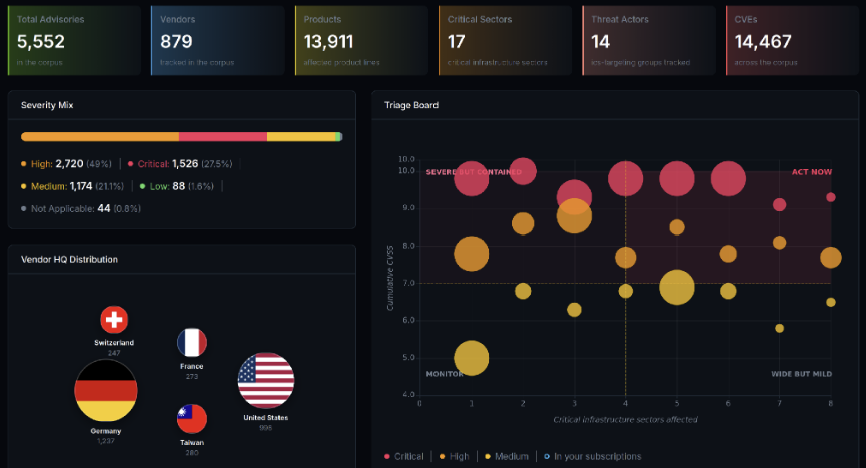
Figure 10. The ThreatMon OT Intelligence dashboard shows advisory coverage, severity distribution and triage. The dashboard totals describe the module’s data corpus, rather than the regional query counts in this article.
Within an organization, that context needs to be combined with the actual asset inventory and access records. Teams should assess whether the listed products are present, whether exposed management services are necessary and what effect the claimed permissions could have on the connected process.
Contact the ThreatMon team to begin assessing your OT assets through the OT Intelligence module and bring the findings into your security team’s investigation process.
The examined underground material includes offers of PLC data access and write permissions, marketing of gateway and VPN access, claims of interference with fuel and energy systems, and a SCADA panel display. Posters describe the value of access through models, protocols, process information and delivery terms. For organizations, these activities raise concerns about operational information disclosure, unauthorized remote access and, where write or command permissions actually exist, effects on process integrity.
The internet records show that related product and service families are externally visible. This information helps identify assets and access paths for investigation. It is insufficient to convert listings into confirmed breaches or port totals into a physical-device inventory. Organizations should begin with the following checks:
The practical priority is to detect access claims that may concern the organization’s own environment and test the advertised permissions against real access conditions. Once that relationship is established, threat intelligence can help security and OT teams decide which system, account or process change to investigate first.

More posts



Share this article
Found it interesting? Don’t hesitate to share it to wow your friends or colleagues
Subscribe to our blog newsletter to follow the latest posts