Dark web breach claims do not all carry the same level of risk. In recent listings involving NHS England, China Railway 12306, Turkey’s IYS, Samsung, Argentina’s Ministry of Health and RENAPER, and alleged CIA and FBI data, the available evidence ranges from sample-backed datasets to claims with no supporting proof.
That difference matters. A dark web post can be an early warning of a real exposure, an old dataset being resold, or an attempt to attract attention or buyers. Security teams therefore need to assess not only what an actor is claiming, but also what evidence supports the claim and whether it can be connected to their own environment.
The recent listings also show how exposed data can create different types of risk. Identity and health records can support targeted phishing and identity fraud. Travel information can expose sensitive details about individuals. Source code claims may create concerns around future vulnerabilities, while compromised credentials can provide a more direct path into an organization.
For defenders, the practical challenge is to separate credible signals from unsupported claims and then determine what action the available evidence justifies.
Between late September and early October 2026, ThreatMon’s Dark Web Threat Watch module identified a large number of claims of data breaches on underground forums. While some included sample data that could be examined, others provided little or no evidence beyond the claim itself.
On October 3, 2026, a threat actor on DarkForums claimed to have breached NHS systems and obtained sensitive data associated with millions of users. The actor published a sample dataset containing NHS Login IDs, NHS Numbers, names, dates of birth, contact details, GP information, prescription histories, appointment records, and other health-related information.
The presence of sample data makes this claim more significant than a listing without supporting material. If the data is authentic and current, the combination of identity and health information could support targeted phishing, identity fraud, and social engineering campaigns. The reported GP and prescription details could also give attackers information that makes impersonation attempts more convincing.
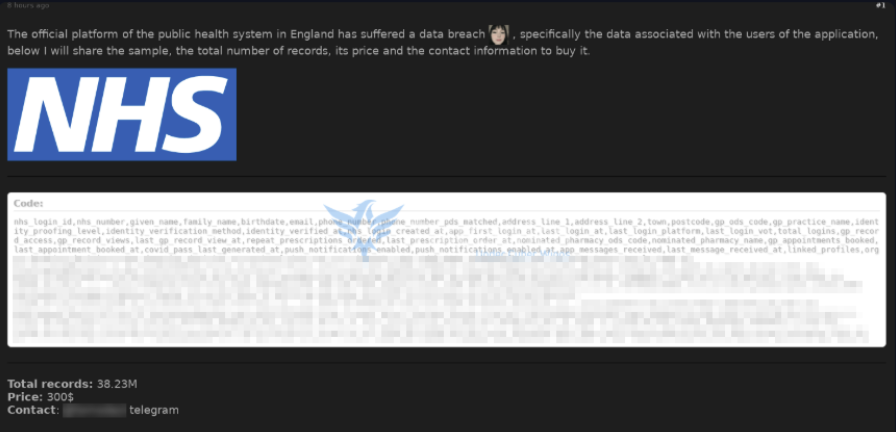
Screenshot of the Post Regarding the Alleged NHS England Data Breach
On October 1, 2026, another actor claimed to be selling 221.23 million records allegedly taken from China Railway 12306. The post included sample records containing names, identity card numbers, phone numbers, dates of birth, travel history, and loyalty program information.
The combination of government-issued identity information and travel history creates a different type of exposure. If authentic, the data could support identity fraud, targeted social engineering, or tracking of individuals. The reported $500 asking price may suggest fast monetization, although the listing alone does not establish whether the dataset is recent, unique, or complete.
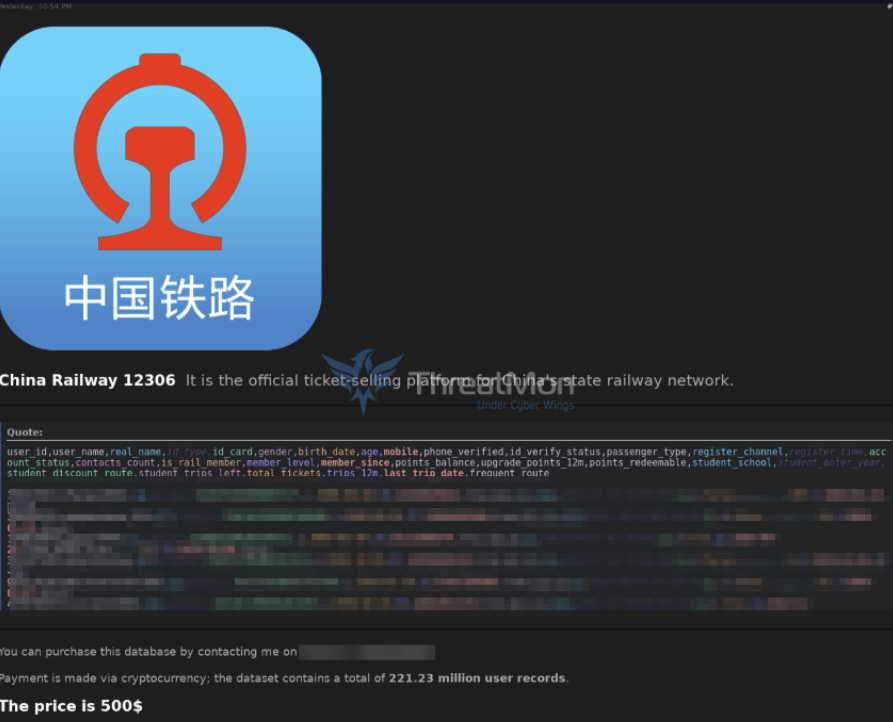
Screenshot of the Post Regarding the Alleged China Railway Leak
On October 4, 2026, a threat actor operating under the alias ‘carrion_secalin’ published a post on DarkForums.me titled “CIA.GOV AND FBI.GOV for sale.” The post alleges that sensitive data belonging to the United States Central Intelligence Agency (CIA) and the Federal Bureau of Investigation (FBI) has been acquired and is available for purchase.
The difference is the evidence. The listing did not include sample files, and no official confirmation was available at the time of reporting. High-profile government names can also be used in unsupported listings to attract attention, build reputation, or lure potential buyers.
For that reason, this claim should be treated as an unverified lead rather than a confirmed breach.
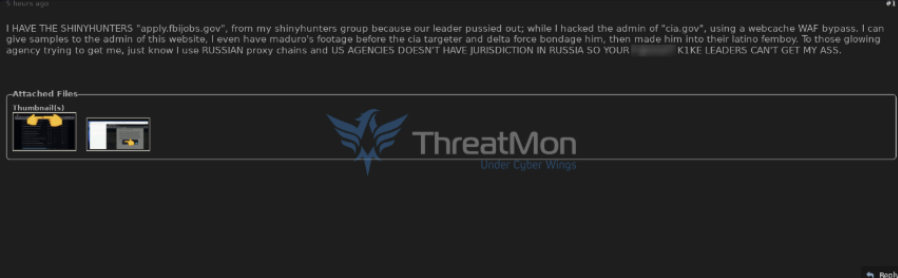
Screenshot of the Post Regarding the Allegation of CIA and FBI Administrative Access
A separate listing claimed that 302,377 records had been taken from Turkey’s İletişim Yönetim Sistemi (IYS). The post included sample records containing names, addresses, phone numbers, email addresses and, in some cases, Turkish national identification numbers.
The reported dataset was said to date from 2021, which is important when assessing its current value. The sample may indicate that the data is real, but that does not establish when it was obtained, whether it was previously leaked, or whether the underlying system is currently compromised. The claim had not been independently verified by IYS or Turkish authorities at the time of reporting.
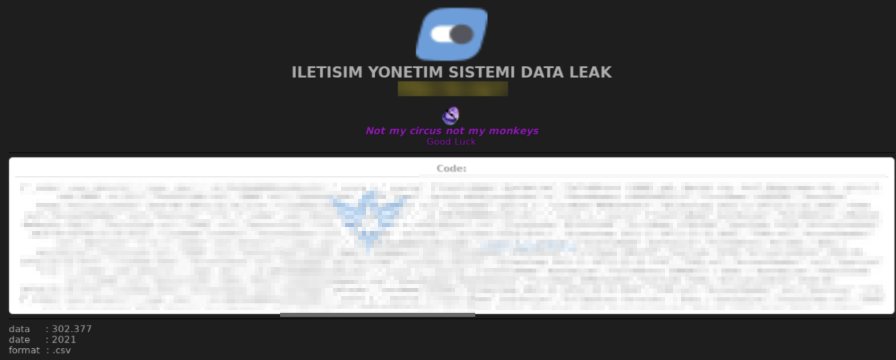
Screenshot of the Post Regarding the Allegation That Turkey’s IYS Data Was Leaked
An underground forum post alleges the theft and leak of a 579 GB dataset that the actor claims contains source code and internal infrastructure details related to Samsung Electronics. The post, published on an anonymous dark web platform, claims to include source code for Samsung’s online services, including Samsung Accounts authentication, identity management, API services, and activation servers used during device first-time setup.
The threat actor, operating under the handle ‘Mr. Raccoon’ and associated with the channel ‘UNC6783’, asserts that the data dump also contains sensitive hardware-level intellectual property. According to the listing, the leaked materials include:
The claim included a session hash but no publicly available proof-of-compromise sample had been released at the time of reporting. That makes the technical implications potentially serious, but the evidence remains limited. In a case like this, the question is not only whether source code was exposed, but whether the claimed material is authentic, current, and unique to the organization.
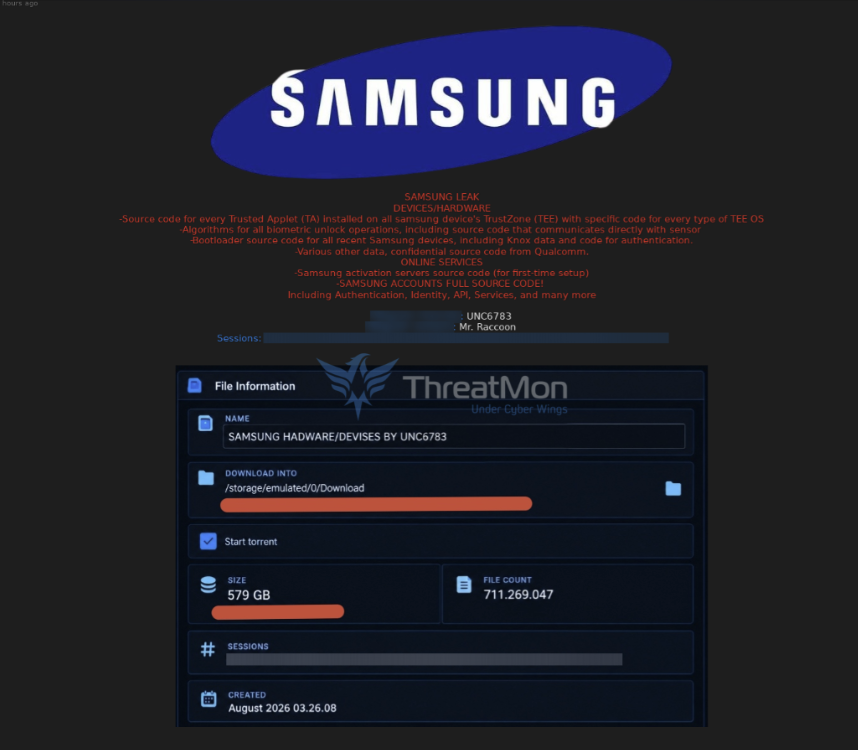
Screenshot of the Post Claiming the Samsung A 579 GB Source Code Was Leaked
A threat actor operating under the handle “Synq1xxs” has posted a claim on an underground forum alleging a data breach affecting Argentina’s Ministry of Health (Ministerio de Salud) and the National Registry of Persons (RENAPER). The post, published approximately two hours ago, asserts that the actor has obtained sensitive personal and administrative data related to healthcare beneficiaries and national identity records.
According to the listing, the exposed dataset includes specific fields such as beneficiary keys (ClaveBeneficiario), document types and numbers (afiTipoDoc, afiDNI), full names and surnames (afiApellido, afiNombre), and status indicators like active registration (Activo) and registration dates (FechaInscripcion). The post also lists technical identifiers such as CUIEEfectorAsignado, province of residence, CEB codes, and the date of the last medical service provided (FechaUltimaPrestacion).
The claimed victims would make this a significant exposure if confirmed, but no independent verification had been published at the time of reporting. As with the other unsupported listings, the claim should be investigated without treating the post itself as proof of compromise.
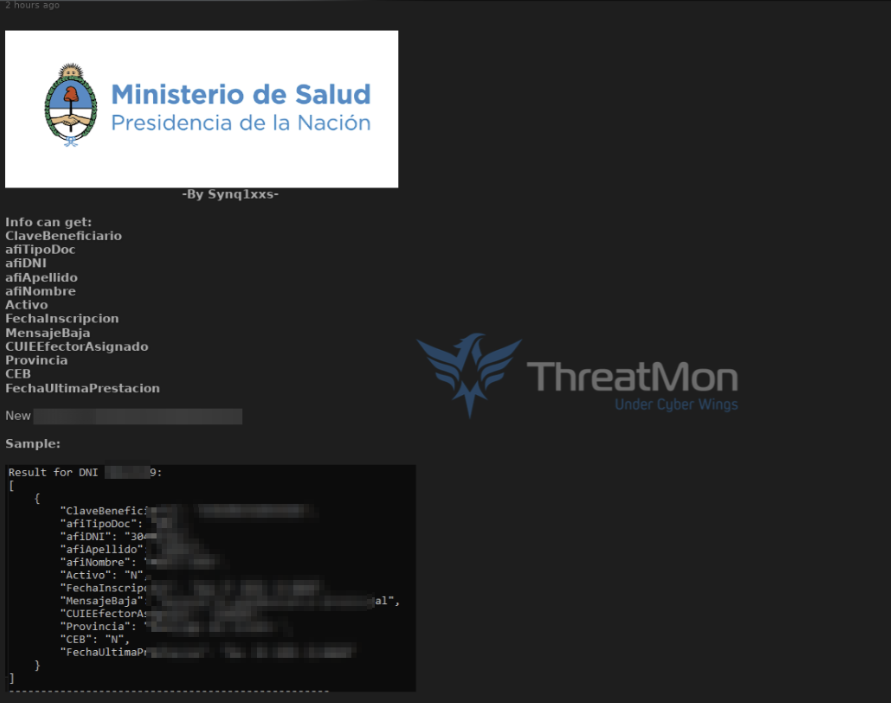
Screenshot of a Post Regarding Allegations of a Data Breach Involving Argentine Health and Identity Data
The recent listings show why dark web monitoring cannot stop at collecting mentions. The first question should be what evidence accompanies the claim. A sample dataset gives analysts something to examine. A screenshot or partial record can provide additional context. A technical indicator may help connect a listing to an existing investigation. A post with none of these should be treated differently.
The second question is whether the data appears current and unique. Old breaches are frequently recycled, combined with other datasets, or presented as new. A valid sample can therefore confirm that exposed data exists without proving that a new intrusion has just occurred.
The third question is whether the claim is relevant to the organization being investigated. A real dataset from 2021 may still create risk, but it does not answer the same question as a recent credential leak or active access listing.
From a ThreatMon perspective, a dark web post is not, by itself, proof of a breach. It is an intelligence lead that can change investigation priorities when it is supported by relevant evidence and connected to the organization’s exposure.
The goal is not to believe or dismiss a claim immediately, but to determine what the available evidence supports, how relevant it is to the organization, and what should be investigated next.
The potential impact depends heavily on the type of information involved. Identity and health information can support targeted phishing, impersonation, identity theft and social engineering. Travel records can expose behavioral information about individuals. Credentials can create a direct access risk when they remain valid or are reused elsewhere. Source code can create longer-term concerns if it reveals security-sensitive logic or weaknesses.
Not every claimed exposure leads to the same outcome, however. A stolen database does not automatically mean that an organization has an active compromise today. A published credential does not prove that an attacker has used it. A source code claim does not by itself demonstrate that a new vulnerability exists.
This is why the first response should focus on validation and exposure assessment, not on the headline attached to the dark web post.
Organizations should first preserve the original listing, including timestamps, screenshots, sample files, usernames and any available technical indicators. This creates a record that can be compared with later updates or changes to the post.
The next step is to compare the claimed data with internal information. For credentials, this means checking whether accounts are valid, whether passwords have been reused, and whether suspicious authentication activity exists. For databases, it means determining whether sample records match real systems and whether the data appears current.
External indicators should also be correlated with internal telemetry. Domains, email addresses, usernames, hashes, infrastructure and other identifiers can provide useful links between a dark web claim and an existing investigation.
Finally, organizations should distinguish between three different questions:
The answers may not be the same.
Dark web monitoring becomes more useful when a post can be connected to other intelligence.
ThreatMon can help security teams monitor underground forums and other external sources for exposed credentials, organizational data, threat actor activity and related signals. These findings can then be enriched and correlated with other indicators to help analysts assess whether a new claim is relevant to their organization.
This is particularly useful when a listing provides only part of the picture. A username, domain, credential set, dataset name or actor identity may have appeared in other sources before. Connecting those signals can help analysts determine whether they are looking at a new exposure, recycled data, or activity that may require further investigation.
Dark web intelligence should not replace forensic investigation or internal monitoring. Its role is to provide external context and help security teams decide which signals deserve attention first.
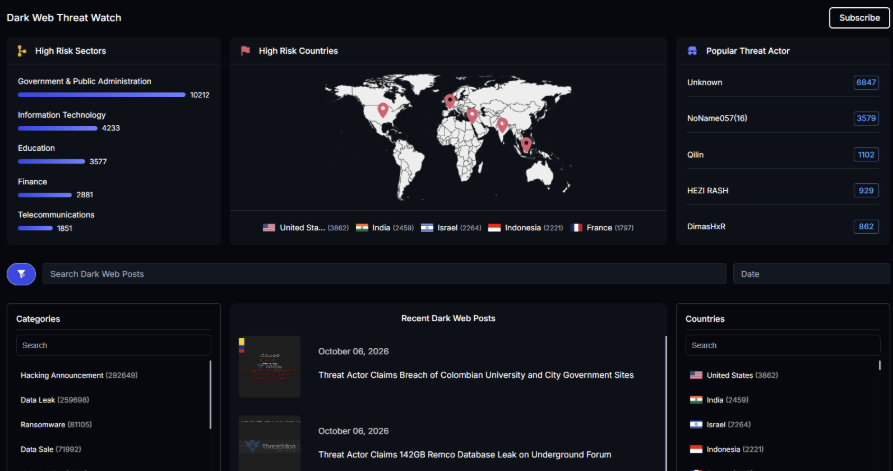
Screenshot from the ThreatMon Dark Web Threat Monitoring Module
Monitor for external exposure. Track company domains, executive accounts, employee credentials and organization-specific references across underground sources.
Validate before escalating. Preserve samples and indicators, then compare them with internal systems and known breach data before treating a claim as confirmed.
Check credential exposure quickly. Where exposed credentials may be genuine, review account status, authentication history, password reuse and active sessions.
Correlate external and internal signals. A dark web post becomes more useful when it can be connected to authentication events, infrastructure indicators or other suspicious activity inside the organization.
Keep a distinction between old and new exposure. A real dataset may still create risk even when it came from an older incident. The response should reflect whether the exposure is historical, current, or linked to active access.
Recent dark web listings involving healthcare providers, government organizations, transportation infrastructure and technology companies show that the existence of a post is only the starting point of an investigation.
Some claims arrive with sample data. Others provide little more than a target name and a promise. Treating both in the same way can lead either to missed risk or unnecessary escalation.
The more useful approach is to assess the evidence, determine whether the exposed information is genuine and relevant, and connect external signals with what is happening inside the organization.
The value of dark web intelligence is not in treating every claim as a breach. It is in identifying which claims matter, why they matter, and what security teams should investigate next.

More posts



Share this article
Found it interesting? Don’t hesitate to share it to wow your friends or colleagues
Subscribe to our blog newsletter to follow the latest posts