When War Goes Digital: The Cyber Side of the Iran–Gulf Crisis
The Cyber Side of the Iran–Gulf Crisis
A 5W1H Guide for Security Teams
Geopolitical crises do not stay on the battlefield. The Iran–Gulf crisis shows how quickly physical escalation can spill into cyberspace. For security teams, this matters now. Not next week.
If you want to follow crisis-driven cyber risk more closely, you can also monitor it through ThreatMon’s platform view, where external exposure and threat signals can be tracked in one place.
1) What is happening?
The Iran–Gulf crisis has escalated. In fast-moving situations like this, cyber activity usually increases too. Attackers take advantage of urgency, confusion, and overloaded operations. That is when phishing spikes, disruption attempts show up, and opportunistic fraud campaigns start circulating.
The UAE has also publicly reported that it foiled organized cyberattacks. Public reporting mentions attempted intrusion activity, ransomware-related actions, and phishing campaigns targeting national platforms.
When reports like this appear, it is a good time to review your current alerting and enrichment flow. If your SOC needs faster context around regional campaigns, actor chatter, and early warning signals, this is exactly the use case for a threat intelligence layer.
2) Where is the risk concentrated?
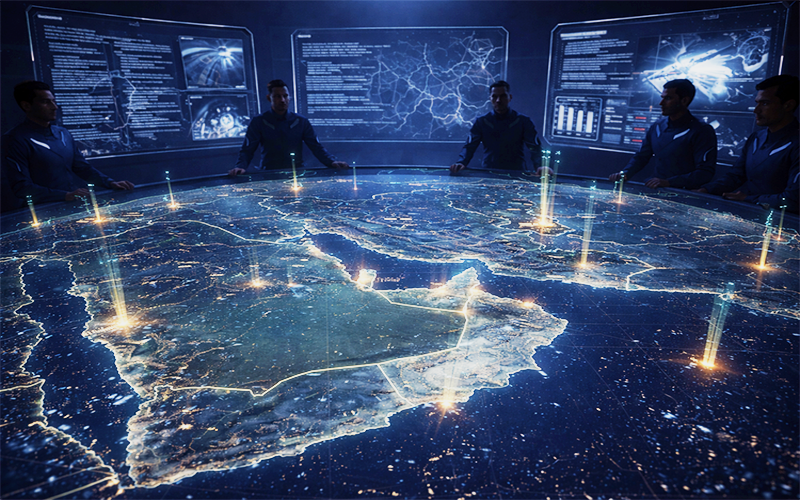
The highest regional exposure is in Gulf countries:
Saudi Arabia
United Arab Emirates (UAE)
Qatar
Kuwait
Bahrain
Oman
The risk is not limited to the region. The Gulf is a key hub for aviation, finance, energy, logistics, and trade. If your organization relies on vendors, routes, payment systems, cloud services, or telecom paths connected to the Gulf, you can still be exposed indirectly.
This is also where visibility becomes practical. Many teams do not realize how much internet-facing infrastructure and third-party access they have until a crisis forces the question. If you want a fast way to map what is exposed, what changed recently, and what should be fixed first, an external attack surface view is the most direct starting point.
3) When does cyber escalation usually spike?
Cyber activity often ramps up in the first 24 to 72 hours after escalation. It also increases when media coverage peaks and when online narratives intensify.
Another signal to watch is connectivity disruption. Reporting indicates a near-total internet blackout in Iran with major drops in connectivity. That reduces visibility and can increase misinformation and opportunistic attacks.
In periods like this, speed matters. Even small operational changes such as emergency DNS edits, temporary access exceptions, or rushed vendor enablement can create openings.
4) Who are the likely threat actors?
In a crisis like this, defenders should expect a mix of actors:
State-aligned operators focused on espionage and strategic access
Proxy groups and hacktivists focused on disruption and publicity
Opportunistic criminals running crisis-themed phishing and scams
Attribution may take time. Impact does not. The patterns that show up first are usually disruption, credential compromise, and fraud.
If your team is also watching for impersonation attempts that ride on crisis narratives, this is a good moment to actively monitor for lookalike domains and fake social accounts. Those attacks often land before technical intrusion attempts do.
5) Why does physical conflict trigger cyber warfare?
Because cyber operations create pressure quickly and at scale. They are used to influence narratives, disrupt services, and collect intelligence while teams are distracted.
You may also see big claims of “major cyberattacks” tied to the conflict. Some reports describe very large operations, but public technical confirmation can be limited at this stage. Treat these claims as signals of elevated cyber posture, not as confirmed attribution.
The practical takeaway is simple. Assume the digital front is active and reduce your exposure while you still have breathing room.
Treat this period as a risk multiplier. Move fast on visibility, hardening, and monitoring, especially if you have exposure to Gulf-linked suppliers or operations.
Quick Action Checklist for SOC / SecOps
First 24 to 72 hours:
Review your external attack surface: VPN, OWA, SSO, API gateways, and DNS changes.
Tighten email security controls against crisis-themed phishing. Update mail gateway rules and filtering.
Prepare for DDoS activity: validate WAF/CDN profiles, rate-limiting, and bot management settings.
Reassess access to critical third parties: aviation, logistics, financial service providers. Reduce unnecessary privileges.
Monitor for brand abuse. Look for spoofed domains, fake social media accounts, and impersonation apps or announcements.
If you want to operationalize the first and fifth items quickly, you can route them through two continuous streams: external exposure monitoring and digital risk monitoring. That combination tends to catch both technical openings and brand-led fraud attempts early.
Final thoughts
The Iran–Gulf crisis highlights a reality security teams already know: when geopolitical tension rises, cyber activity often follows.
You do not need to operate in the region to be affected. Supply chains, service providers, and digital dependencies can create indirect exposure. If your business touches the Gulf region in any way, now is the time to reduce exposure and tighten monitoring.
If you want a clearer view of your risk posture during this escalation, ThreatMon can support that with continuous monitoring across exposure, threat intelligence signals, and digital risk indicators.