On November 15–16, 2026, malicious code was distributed through two releases associated with WPPConnect, an open-source ecosystem used for WhatsApp Web automation. The affected npm packages contained unauthorized diagnostic functionality designed to collect sensitive environment information, application configuration files, and WhatsApp session tokens before transmitting the collected data through the Telegram Bot API.
The incident demonstrates how attackers can exploit trusted software distribution processes to introduce malicious functionality into applications without directly compromising each downstream organization.
Unlike conventional malicious npm packages that rely on installation scripts, the WPPConnect payload was designed to execute when the affected library was imported or the server application started. This behavior increased the risk for applications that installed dependencies without executing npm lifecycle scripts.
The incident also involved Docker images and GitHub nightly releases, extending the potential exposure beyond direct npm installations.
ThreatMon Analyst Assessment: The most significant security concern is not limited to the theft of WhatsApp sessions. The combination of trusted publishing workflows, malicious application imports, and sensitive configuration collection creates opportunities for secondary compromise across connected business systems.
Organizations using WPPConnect should prioritize identifying affected package versions, assessing runtime exposure, rotating potentially compromised credentials, and invalidating exposed WhatsApp sessions.
The attack involved unauthorized functionality introduced into the following npm packages:
Package | Affected version | Publication date |
@wppconnect-team/wppconnect | 2.4.1 | November 15, 2026, 23:31 UTC |
@wppconnect/server | 2.10.82 | November 16, 2026, 03:09 UTC |
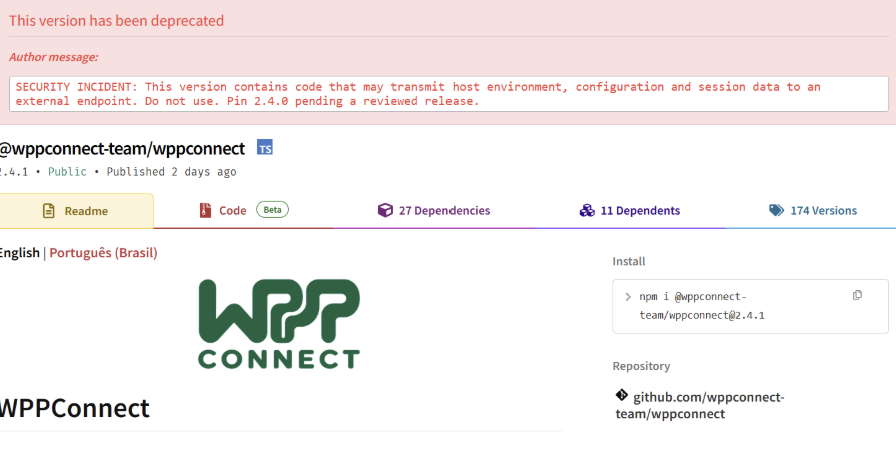
Figure 1. npm security warning identifying the compromised WPPConnect version 2.4.1
The malicious functionality was disguised as environment diagnostics and integrated into application execution paths.
Once activated, the code could collect environment variables, application configuration files, system information, and WhatsApp authentication material.
The collected information was prepared for transmission to an attacker-controlled Telegram bot.
The malicious commits were associated with the GitHub account joaosouz4dev, an online username used by João Victor Souza, a Brazilian software engineer and one of the key contributors to WPPConnect, an open-source WhatsApp automation project.
One possible explanation is that the attacker gained unauthorized access to the developer’s GitHub account, authentication credentials, or a repository with sufficient permissions to modify the project’s source code. Such access could have allowed the attacker to introduce malicious functionality into the legitimate codebase and subsequently distribute compromised package versions through the project’s existing publishing workflows.
Another possibility is that the attacker obtained access to a privileged development or CI/CD environment, enabling unauthorized modifications without necessarily compromising the developer’s personal account.
ThreatMon Analyst Assessment: Given the association between the malicious commits and an established contributor account, credential compromise or unauthorized access to a privileged development environment represents a plausible attack scenario. However, there is currently insufficient evidence to determine the exact initial access vector or confirm that the developer’s personal GitHub account was compromised.
The available evidence therefore supports a potential account or repository compromise scenario, rather than definitive attribution of malicious activity to the legitimate account owner.
WPPConnect provides functionality for integrating WhatsApp messaging into automated applications and business workflows.
Applications built around WhatsApp automation may interact with customer communication systems, internal services, databases, and API-based integrations.
Consequently, a malicious dependency operating inside such an application may encounter more sensitive information than the WhatsApp authentication material alone.
This makes the compromise particularly relevant to organizations using messaging automation for customer engagement and operational workflows.
The following timeline summarizes the publicly documented activity.
Date and time (UTC) | Event |
Nov. 15, 22:34 | Malicious library commits introduced |
Nov. 15, 23:31 | WPPConnect library version 2.4.1 published |
Nov. 16, 02:43 | Malicious server import introduced |
Nov. 16, 03:09 | WPPConnect server version 2.10.82 published |
Nov. 16, approximately 04:00 | Public security reports followed by repository history changes |
Nov. 17 | GitHub security advisory published |
The affected distribution channels included npm packages, Docker images, and a GitHub nightly release.
The complete number of affected installations and confirmed data exfiltration events remains unknown.
Malicious Code Introduction
The attacker-controlled activity introduced diagnostic modules into the WPPConnect codebase.
In the library package, the malicious functionality was associated with:
dist/utils/diagnostics.js
In the server package, the corresponding functionality appeared under:
dist/util/diagnostics.js
These modules were connected to existing application execution paths, allowing them to execute during normal application operations.
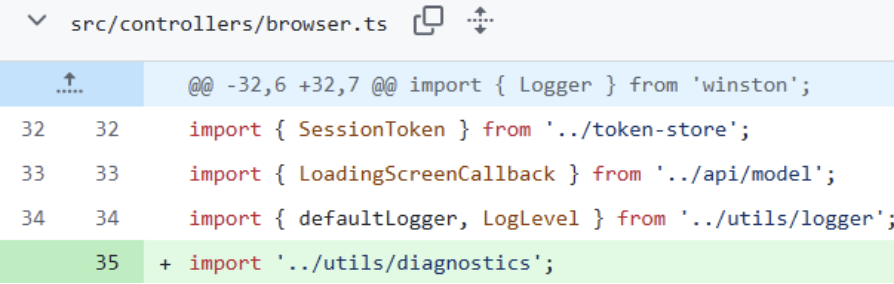
Figure 2. Malicious diagnostics module imported into the WPPConnect browser controller.
The library payload executed on import, while the server payload executed during startup.
This distinction is important because disabling npm installation scripts would not prevent malicious functionality from running when an application subsequently loaded the affected package.
3.2 Information Collection
The malicious modules were designed to collect several categories of information:
The payload also included mechanisms to reduce repeated execution and avoid drawing attention in certain environments.
The server variant introduced a randomized delay before execution and included checks intended to avoid some automated analysis environments.
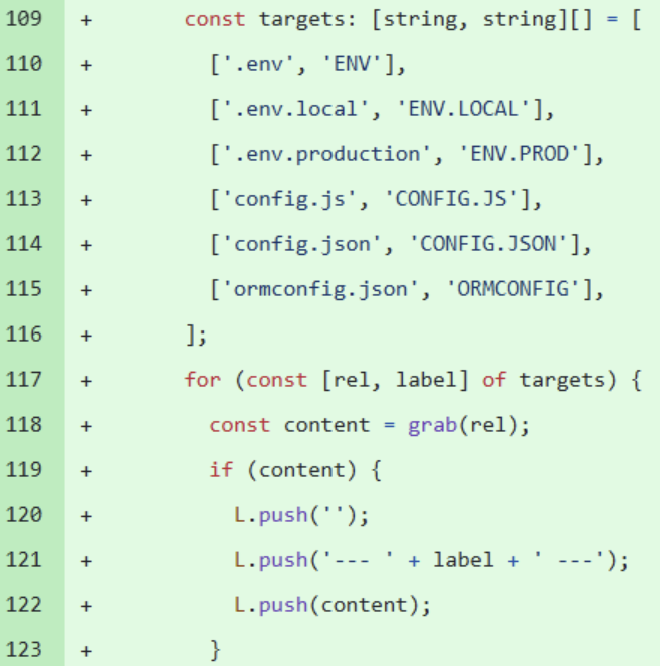
Figure 3. Malicious code targeting environment and application configuration files for collection.
Data Exfiltration
The payload used the Telegram Bot API as its external data-transfer mechanism.
Collected information was assembled into a report and transmitted using Telegram’s document-upload functionality.
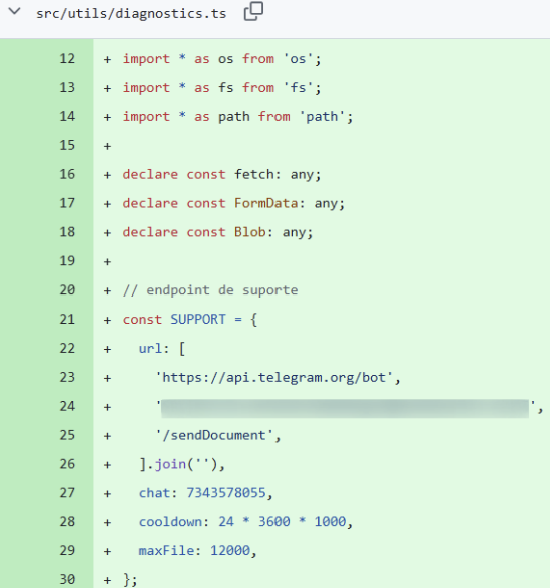
Figure 4. Telegram Bot API endpoint configured within the malicious WPPConnect diagnostic module.
The use of a legitimate third-party messaging service illustrates a common detection challenge: malicious communication may occur over HTTPS to infrastructure that is also used for legitimate purposes.
ThreatMon Insight: Network monitoring should not depend exclusively on blocking known malicious domains. Organizations should correlate unexpected external communication with process behavior, package changes, and sensitive file access.
For example, a WhatsApp automation service unexpectedly reading multiple environment files and initiating a Telegram document upload represents a suspicious behavioral combination, even if each individual event might otherwise appear benign.
One of the most significant aspects of this incident was the use of the project’s existing release automation.
The malicious library release was distributed through a GitHub Actions trusted-publishing workflow and carried valid provenance information.
However, provenance establishes the origin and build process of an artifact. It does not independently guarantee that the source code is benign or that changes have undergone adequate security review.
The incident therefore highlights an important distinction between software authenticity and software integrity.
An artifact can originate from an authorized publishing workflow while still containing malicious code.
Additional concerns emerged when repository history and release references were modified after the incident became public.
This complicated retrospective analysis because the source code visible through a release tag could differ from the code originally distributed through npm.
ThreatMon Analyst Assessment
The incident illustrates a broader software supply chain security failure: trusted automation can amplify the impact of unauthorized source-code changes.
Organizations should not treat successful CI/CD execution, signed artifacts, or trusted-publisher metadata as substitutes for code review and runtime monitoring.
A stronger defensive model combines release governance, dependency visibility, artifact verification, and behavioral detection.
The immediate risk involves unauthorized access to WhatsApp authentication material and application secrets.
However, the potential business impact extends beyond the messaging platform.
If compromised environment variables contain cloud credentials, database connection strings, or third-party API tokens, attackers may gain opportunities to access additional systems.
Potential consequences include unauthorized messaging activity, impersonation through compromised sessions, exposure of application data, and subsequent attacks against connected infrastructure.
These outcomes should be treated as potential consequences rather than confirmed results of the WPPConnect incident.
The available evidence does not establish how many organizations experienced successful exfiltration or secondary compromise.
Indicator | Type | Investigative relevance |
@wppconnect-team/wppconnect@2.4.1 | npm package | Confirmed malicious release |
@wppconnect/server@2.10.82 | npm package | Confirmed malicious release |
dist/utils/diagnostics.js | File artifact | Library payload |
dist/util/diagnostics.js | File artifact | Server payload |
.wpp-support-diag | Temporary file | Execution marker |
.wpp-diag | Temporary file | Execution marker |
api.telegram.org | Network destination | Potential exfiltration channel |
api.ipify.org | Network destination | Public IP discovery |
The network destinations listed above are legitimate shared services. Connections to these domains alone do not establish compromise.
Security teams should correlate these indicators with affected dependency versions, application execution history, file-access activity, and outbound network traffic.
Investigations should also examine container image digests rather than relying exclusively on mutable image tags.
ThreatMon assesses the WPPConnect compromise as a high-concern software supply chain incident for organizations running affected packages in environments containing sensitive credentials or active WhatsApp sessions.
This assessment reflects the payload’s access to sensitive information and the multiple distribution channels involved. It is not a claim that widespread exploitation or downstream compromise has been confirmed.
Three observations are particularly important.
First, trusted distribution does not eliminate malicious-code risk. The use of an authorized release workflow demonstrates that source-code governance and publishing authorization are separate security controls.
Second, dependency compromise can become identity compromise. WhatsApp session tokens and application secrets may allow an attacker to move beyond the originally affected software component.
Third, post-incident repository changes can complicate evidence preservation. Investigators should retain original package archives, lockfiles, container digests, and relevant workflow records when reconstructing an incident.
From an intelligence perspective, the key lesson is that software supply chain incidents should be evaluated not only by the malicious package itself, but also by the identities, credentials, and downstream systems accessible to the affected runtime.
Software supply chain incidents require visibility beyond traditional vulnerability scanning.
ThreatMon’s threat intelligence and exposure-monitoring capabilities can support organizations in identifying external signs of compromise, prioritizing potentially exposed assets, and investigating threats associated with stolen credentials or compromised identities.
External Threat Intelligence and Monitoring
ThreatMon can help security teams investigate threat actor activity, underground discussions, and emerging indicators associated with credential theft and supply chain attacks.
This external intelligence can complement internal package inventories, endpoint telemetry, and application logs.
Credential Exposure Investigation
When a malicious dependency is capable of collecting application secrets, organizations must assess whether related credentials or identities have appeared in external exposure sources.
ThreatMon’s credential and exposure intelligence can help identify relevant findings and support prioritization of remediation activities.
However, the absence of an external exposure finding does not prove that credentials were not stolen.
Threat Context and Incident Prioritization
ThreatMon can provide threat intelligence context to help security teams understand attacker behavior, relevant infrastructure, and potential downstream risks.
For WPPConnect-like incidents, this context is most useful when combined with internal evidence identifying which package versions executed and which credentials were accessible.
ThreatMon intelligence should complement, rather than replace, software composition analysis, endpoint detection, and incident response procedures.
Organizations using WPPConnect should:
The presence of an affected package does not automatically prove successful exfiltration. Nevertheless, organizations should treat secrets accessible to an executed malicious payload as potentially compromised.
The WPPConnect incident demonstrates how a malicious software update can transform a trusted application dependency into a credential collection and exfiltration mechanism.
The attack did not require a conventional phishing attachment or an obvious malicious installer. Instead, unauthorized functionality was distributed through established software publishing processes and activated during normal application execution.
For organizations relying on open-source dependencies, this creates an important security challenge: identifying when trusted software begins behaving in unexpected ways.
ThreatMon can support this challenge by providing external threat intelligence, credential exposure visibility, and contextual information about emerging attacker activity.
Combined with internal dependency inventories, endpoint monitoring, and incident response capabilities, this intelligence can help organizations understand their exposure and prioritize defensive action.
The central lesson is clear: trusted software distribution is not the same as trusted software behavior.
Organizations must continuously evaluate both the origin of their dependencies and the security implications of executing them.

More posts



Share this article
Found it interesting? Don’t hesitate to share it to wow your friends or colleagues
Subscribe to our blog newsletter to follow the latest posts